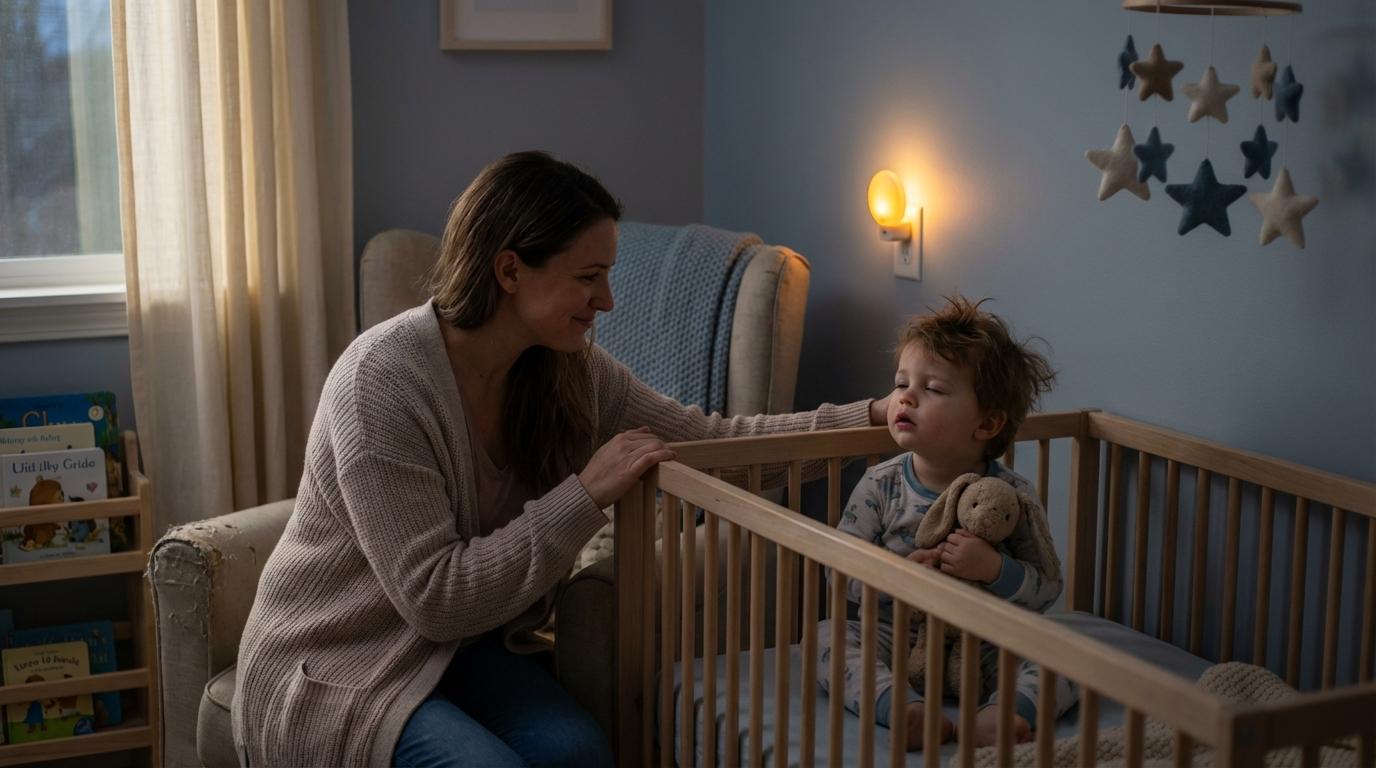
Move your child from a crib to a bed when they reach about 35 inches (89 cm) tall, or as soon as they can climb out, whichever comes first. A fall from the crib rail is the real risk. Most children switch between 18 months and 3½ years. If your toddler sleeps well in the crib and can’t climb out, there is no rush: kids who stay in a crib longer often find it easier to stay in bed once they move.
Key takeaways
- Switch at about 35 inches tall or at the first climb-out, not on a fixed birthday.
- Avoid making the switch in the same weeks as a new sibling, potty training or starting daycare.
- Once your child can leave the bed, the whole bedroom becomes their crib: anchor furniture and secure cords and windows.
- Keep the bedtime routine the same. Only the bed changes.
- Calmly walking your child back to bed, again and again, works better than long negotiations.
Signs it’s time to move
- Climbing out, or trying to. If your child gets a leg over the rail, it’s time. Lower the mattress to its lowest setting while you prepare.
- Height. At about 35 inches, or when the rail is below chest height with the mattress at its lowest, a crib stops being safe.
- Potty training at night. A child who needs to get up to use the toilet needs a bed they can leave.
Some reasons are not good ones on their own. A new baby needing the crib is one; a second crib or a bassinet is often easier than rushing a toddler out. Another is a toddler simply asking, if they’re still sleeping well.
Toddler bed, convertible crib or twin bed?
| Option | Good for | Keep in mind |
|---|---|---|
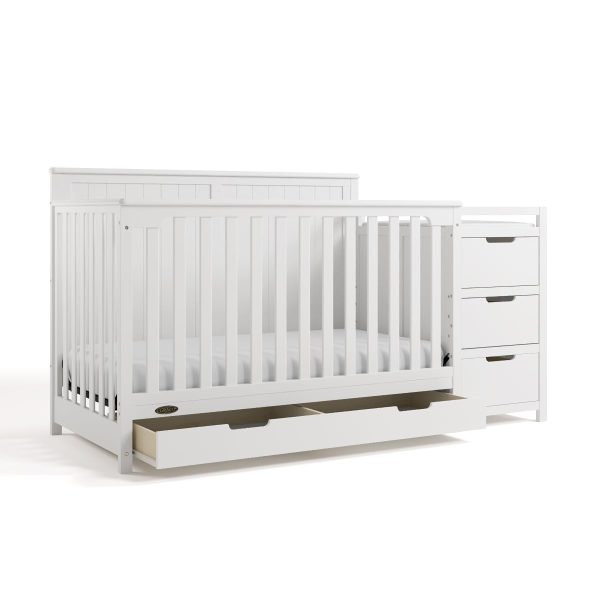
| Convertible crib (toddler-bed conversion) | Familiar frame and mattress, so the change feels small | You may need to buy the conversion rail separately |
| Toddler bed | Low to the floor and uses the crib mattress | Outgrown within a few years |
| Twin bed with guard rail | One purchase that lasts for years | Higher off the floor; use a rail and a low frame |
| Floor bed (mattress on the floor) | No falls, and it suits Montessori-style rooms | The room must be fully toddler-proofed |
Toddler-proof the bedroom first
A child who can get out of bed can reach everything in the room, often at 5 a.m. while you’re asleep. Before the first night:
- Anchor dressers, bookshelves and the TV to the wall.
- Use cordless blinds, or tie cords up high, out of reach.
- Fit window stops or guards, and move furniture away from windows.
- Cover outlets, and remove small objects, button batteries and medicines from the room.
- Consider a safety gate at the bedroom door so your child can’t wander the house or reach the stairs.
- Add a guard rail if the bed is off the floor, and a soft rug beside it.
Our baby-proofing checklist covers the rest of the house.
A step-by-step plan
- Talk about it. Read a book about big-kid beds and let your toddler choose the sheets or a pillowcase.
- Start with naps or bedtime, not both at once, if your child seems unsure. Some families start with a nap or a “practice” story in the new bed.
- Keep the routine identical: bath, pajamas, teeth, two books, song, lights out. A visual chart helps.
- Set one simple rule: “We stay in bed until the light turns green.” An ok-to-wake clock or a simple lamp timer makes it concrete.
- Return calmly. If your child gets up, walk them back with as few words as possible. It may take many returns for a few nights.
- Praise the mornings. Notice and celebrate staying in bed, with a sticker or a special breakfast job.
Common hiccups
“My toddler keeps getting up.”
This is normal for the first one or two weeks. Stay boring and consistent. Avoid lying down until they fall asleep unless you’re happy to keep doing it.
“They were fine for a week, then it fell apart.”
The novelty wears off. Go back to the basics: the same routine, the same rule and calm returns. It usually settles again within days.
“Should I go back to the crib?”
If the switch was early (under 2) and your child wasn’t climbing out, it’s fine to go back for a few months. If they were climbing out, keep the bed and focus on making the room safe.
- Keep pillows and duvets light until your child is used to the bed. Under-12-month safe-sleep rules no longer apply, but bulky bedding can still tangle a small child.
- Never use a bunk bed’s top bunk for children under 6.
- Check the bed and rail for recalls, and keep gaps between the mattress and frame small.
Frequently asked questions
What’s the best age to move to a toddler bed?
There’s no single best age. Many children switch between 2 and 3½. Move earlier only if your child is climbing out or has reached about 35 inches tall.
Can my toddler sleep with a pillow and blanket now?
After 12 months, a small, flat pillow and a light blanket are generally fine. Many toddlers keep using a sleep sack in their size, which also makes climbing harder.
Should I lock the bedroom door?
No. Use a safety gate at the doorway instead, so your child is contained but can still see and hear you, and you can reach them quickly.
See also: sleep schedules by age, nap transitions and early waking.