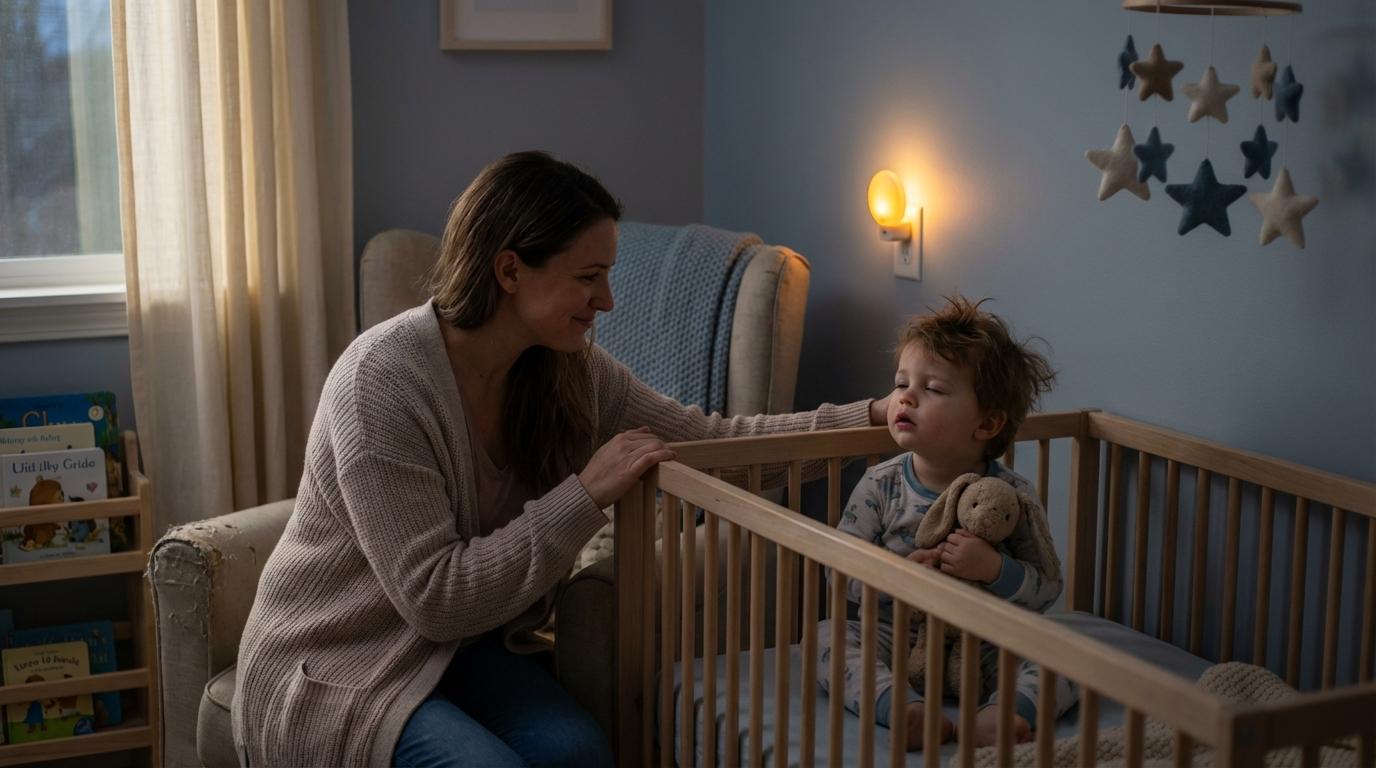
A sleep regression is a stretch — usually two to six weeks — when a baby who was sleeping reasonably well suddenly starts waking more at night, fighting naps or taking short ones. Regressions most often appear around 4 months, 8–10 months, 12 months, 18 months and 2 years, and they’re almost always linked to development: a maturing sleep cycle, new motor skills, separation anxiety or nap changes. They’re exhausting, but they are temporary.
Key takeaways
- The 4-month regression is a permanent change in how your baby sleeps — after it, sleep comes in adult-like cycles.
- Most later regressions are tied to new skills (crawling, standing, talking) and separation anxiety.
- Keep routines steady, protect daytime sleep, and give your baby lots of practice with new skills while awake.
- Avoid starting habits you don’t want to keep long term, but do give extra comfort — it doesn’t “spoil” a baby.
- Persistent problems beyond six weeks, or any signs of illness, deserve a call to your pediatrician.
Common sleep regression ages at a glance
| Age | What’s usually behind it | What helps most |
|---|---|---|
| ~4 months | Sleep architecture matures into light and deep cycles; brief wakings between cycles | Consistent routine, some practice falling asleep drowsy but awake |
| 8–10 months | Crawling, pulling to stand, separation anxiety, moving from 3 naps to 2 | Floor time to practise skills, reassurance, earlier bedtime on short-nap days |
| 12 months | Walking, nap pushback (but most babies still need two naps) | Don’t rush to one nap — try moving nap 2 later first |
| 18 months | Independence, language burst, teething (molars), testing limits | Calm, firm boundaries; predictable bedtime routine with choices |
| 2 years | Fears, big changes (new sibling, toddler bed, potty training) | Keep the crib for now if possible; talk through changes in advance |
The 4-month regression, explained
Newborns drop straight into deep sleep. Around three to four months, their sleep reorganises into cycles of light and deep sleep that last roughly 45 minutes for naps and repeat through the night. At the end of each cycle, everyone surfaces briefly. If your baby always falls asleep while feeding or being rocked, waking alone in the crib at the end of a cycle can feel like a surprise — so they call for help to get back to sleep.
That’s why this “regression” is really a progression. The fix isn’t to wait for old sleep to come back, but to help your baby learn to link cycles, gently and at your own pace.
How to get through any regression
1. Keep the routine boringly consistent
Same steps, same order, same place every night. A predictable 20–30 minute routine is one of the strongest cues for sleep. Our sleep schedule guide includes a simple routine you can copy.
2. Protect daytime sleep
Overtiredness makes night waking worse. Check that wake windows match your baby’s age (see our wake windows chart) and consider an earlier bedtime — even 30 minutes — after a day of short naps.
3. Practise new skills by day
A baby who has just learned to pull to standing will often “practise” in the crib at 2 am. Give lots of floor time during the day. If they get stuck standing, show them how to bend their knees and sit down, then settle them on their back.
4. Offer comfort, then step back gradually
Comfort is never wrong. If you’d like to reduce how much help your baby needs, choose a gentle approach you can keep up — for example, patting and shushing in the crib rather than picking up, then slowly doing less over several nights.
5. Respond to separation anxiety with confidence
Play peek-a-boo and short “goodbye–hello” games during the day, use a consistent goodbye phrase at bedtime, and keep your returns calm and brief at night.
6. Rule out the other causes
Hunger during growth spurts, teething, ear infections, colds and room temperature can all look like a regression. Treat what’s treatable, and talk to your pediatrician before giving any pain relief.
Looking after yourself
Regressions land on parents who are already tired. Take turns with night wakings if you have a partner, nap when you can, lower your standards for everything else for a few weeks, and say yes to help. If exhaustion turns into persistent low mood, anxiety or feeling unable to cope, please reach out — see our guide for new parents for postpartum support lines.
- sleep problems last longer than about six weeks with no improvement;
- your baby has a fever, pulls at their ears, is feeding poorly or seems unwell;
- you notice loud snoring, gasping or pauses in breathing during sleep;
- your baby loses skills they previously had.
Frequently asked questions
Does every baby have sleep regressions?
No. Some babies sail through these ages with barely a blip; others are clearly affected. Both are normal.
Should I start sleep training during a regression?
You can, but many families find it easier to wait until any illness or teething has passed. If you do choose a method, pick one you can apply consistently for at least a week.
Is the 6-month or 3-month regression real?
These are less consistently described. Disrupted sleep at those ages is more often linked to nap changes, growth spurts or a too-late bedtime.