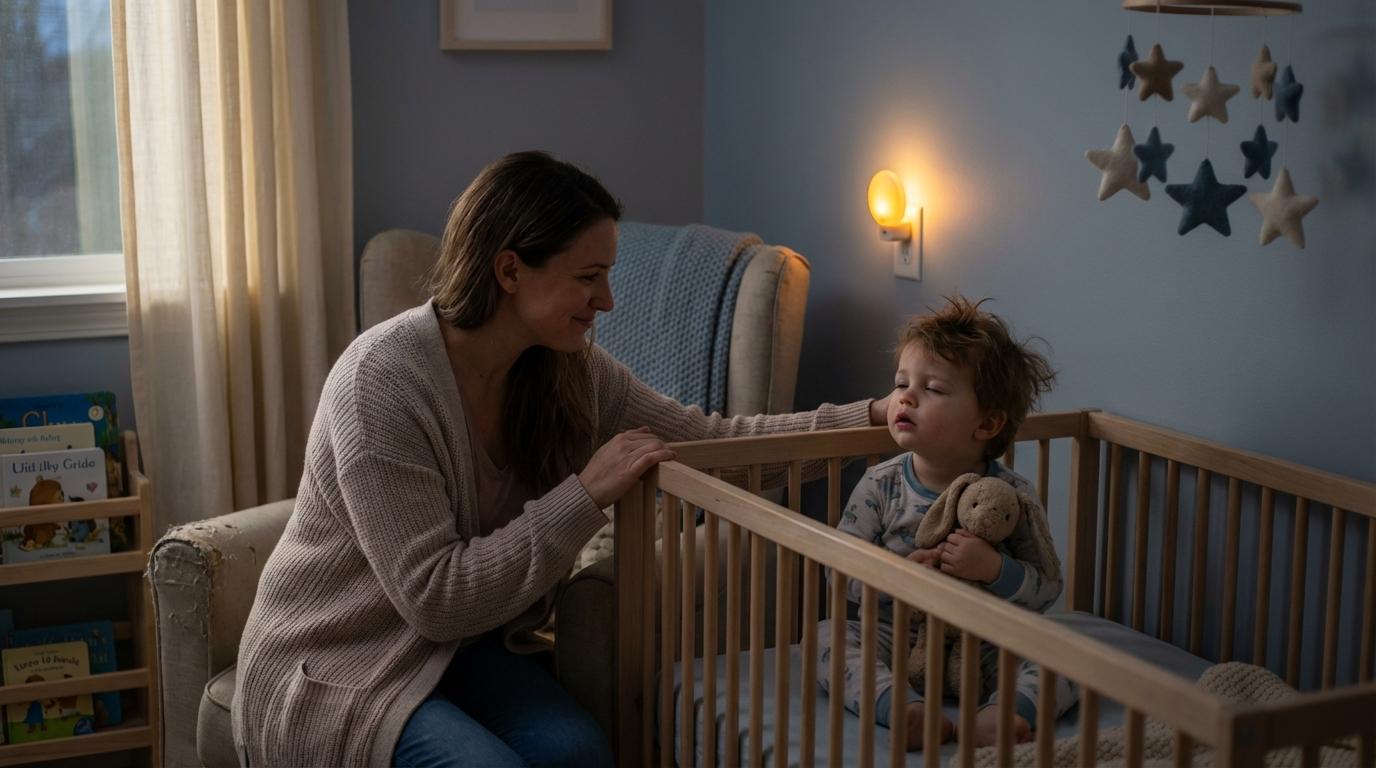
Early waking — a baby who starts the day before 6 am and won’t go back to sleep — is one of the most common sleep complaints. It usually comes down to a handful of fixable causes: morning light or noise, a schedule that’s slightly off (too-late bedtime, too-long or too-short naps), hunger, or a habit like an immediate feed or bright lights the moment your baby stirs.
Key takeaways
- Between about 6:00 and 7:00 am is a normal wake-up for many babies; “early” usually means before 6.
- Make the room truly dark from 4 am onwards and use steady white noise.
- Overtiredness often causes early waking — try bedtime 15–30 minutes earlier.
- Treat anything before 6 am like a night waking: dim, quiet, brief.
- Change one thing at a time and give it 7–10 days.
Why early mornings are hard
Sleep pressure is lowest in the early morning, and sleep is lighter and more dream-heavy. That makes the last few hours of the night the easiest time for a small trigger — light, a garbage truck, a wet diaper — to wake a baby fully.
The 8 most common causes
| Cause | What to try |
|---|---|
| Light leaking into the room | Blackout blinds or temporary blackout film; cover LEDs on devices |
| Morning noise | Continuous white noise at a moderate volume — see our white noise guide |
| Bedtime too late (overtired) | Move bedtime 15–30 minutes earlier for a week |
| Bedtime too early for age | For older babies with long naps, shift bedtime later in small steps |
| Last wake window too long | Check your wake windows; add a catnap or shorten the gap |
| First nap too early | Push the first nap later by 10–15 minutes so the early start isn’t “rewarded” with sleep |
| Hunger | Offer a fuller last feed or a dream feed; for older babies, a satisfying dinner |
| Habit | Keep pre-6 am responses dull: no lights, no play, minimal talking |
A two-week plan
- Days 1–3: fix the environment. Dark room, white noise, comfortable temperature, suitable sleep sack.
- Days 4–7: adjust bedtime. If your baby is cranky by late afternoon, try an earlier bedtime. If they’re cheerful and naps are long, try a later one.
- Days 8–14: protect the first nap. Keep the first nap at its usual time even after an early start, so the body clock doesn’t “learn” a 5 am day.
- Throughout: respond to pre-6 am wakings as you would at night — feed if needed, but keep the lights low and the room boring. Start the day with bright light and breakfast at your chosen time.
Using a monitor wisely
A video monitor lets you see whether your baby is genuinely awake or just stirring and chattering — many babies resettle on their own if left for a few minutes. Keep the parent unit’s volume low so normal grunts don’t wake you both.
What’s normal
- Young babies under about four months often wake early to feed — that’s expected.
- Seasonal changes, daylight saving and travel can shift wake-ups for a week or two.
- Some families are simply early-chronotype families. If your baby wakes at 6:00 happy and well-rested, that may be their natural rhythm.
Frequently asked questions
Will a later bedtime make my baby sleep in?
Often the opposite: an overtired baby tends to wake earlier. Try an earlier bedtime first.
Should I feed my baby at 5 am?
Young babies may need it. For older babies who eat well by day, try a shorter feed or comforting without feeding, keeping the room dark.
How long until early waking improves?
Give each change about a week. Body clocks shift slowly.