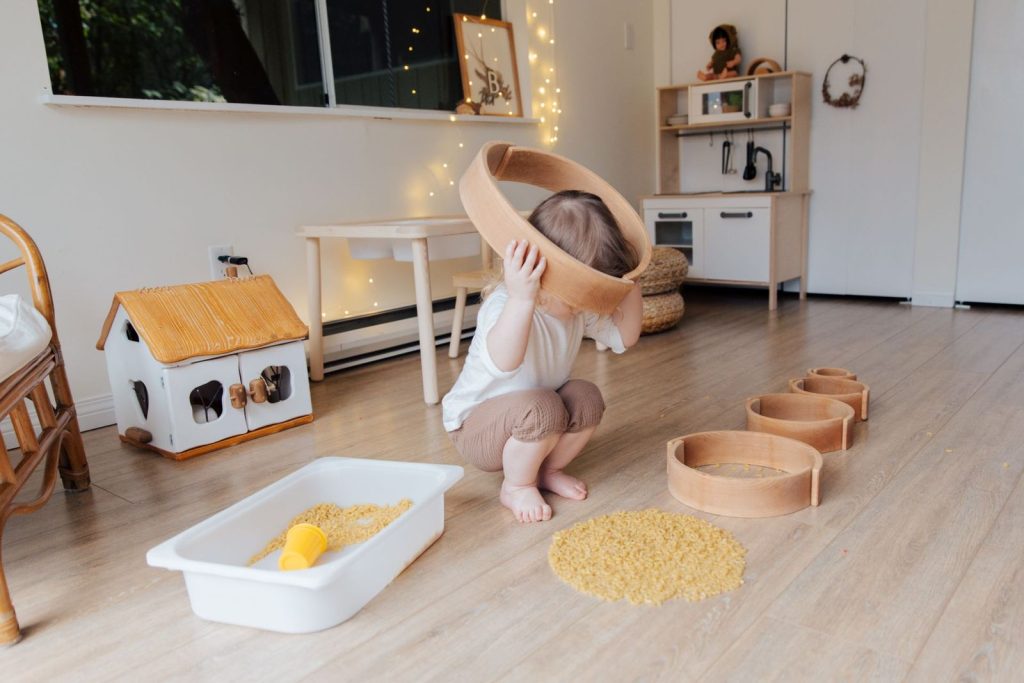
Montessori at home isn’t about buying wooden toys or perfect shelves. It’s a way of following your child’s interests, giving them freedom to move and explore safely, and inviting them to do real things for themselves. A few small changes — a safe floor space, a low shelf with a handful of toys, and time to practise everyday skills — capture most of the benefits.
Key takeaways
- Create a safe “yes space” where your baby can move freely.
- Offer a few toys on a low shelf and rotate them every week or two.
- Choose simple toys that do one thing and let your child do the work.
- Invite toddlers into real tasks: wiping, pouring, putting shoes away.
- Observe before you step in — struggle (within reason) is learning.
The core ideas
- Follow the child: notice what your child is drawn to and offer more of it.
- Prepared environment: a space set up so your child can reach, choose and tidy.
- Freedom within limits: lots of choice inside clear, safe boundaries.
- Independence: “Help me to do it myself.”
- Concentration: protect focused play — don’t interrupt unnecessarily.
Setting up a space (0–12 months)
- A firm floor mat for movement and tummy time — see our tummy time guide.
- An unbreakable mirror at floor level.
- A low shelf with 3–6 objects: a rattle, a ball, a stacking cup, a book.
- Room to roll, crawl and pull up — with furniture anchored and sharp corners covered (see our baby-proofing checklist).
Toddler activities (12–36 months)
| Skill | Activity |
|---|---|
| Fine motor | Posting coins into a box, threading big beads, opening containers |
| Practical life | Wiping the table, pouring water, washing fruit, putting toys away |
| Language | Real objects and picture cards to name; real-life picture books |
| Gross motor | Climbing, pushing a walker wagon, carrying a basket |
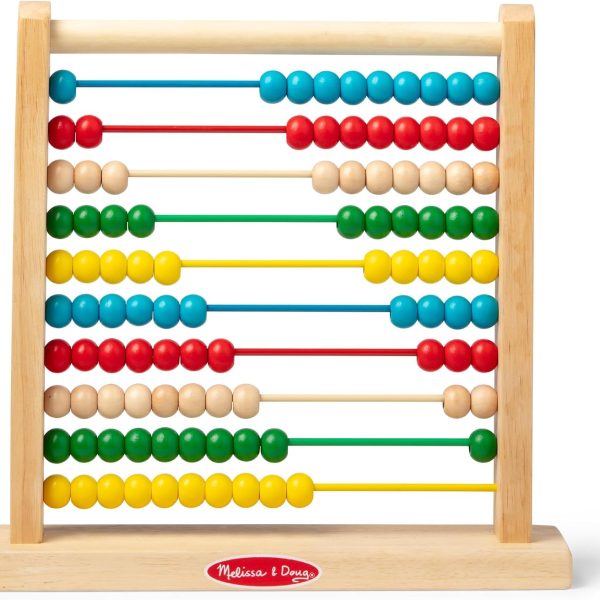
| Early maths | Sorting, counting beads, stacking from big to small |
Choosing Montessori-friendly toys
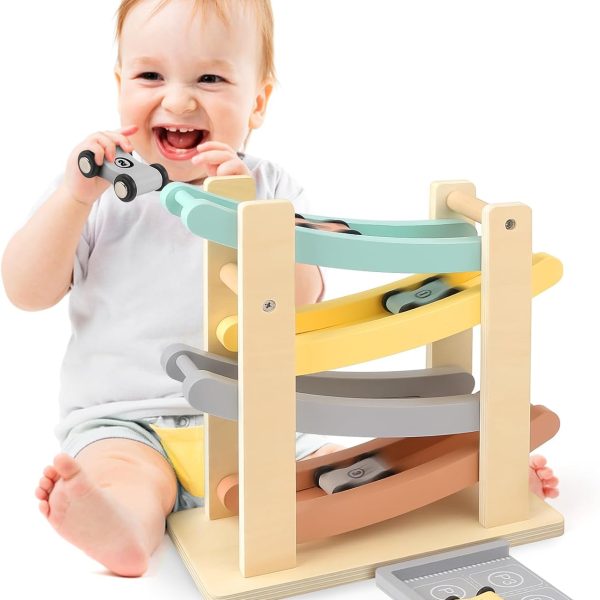
- Simple and realistic rather than flashing and noisy.
- One clear purpose or skill per toy.
- Natural materials are lovely but not essential — durability and safety matter most.
- Toys your child can complete themselves, with a clear “done”.
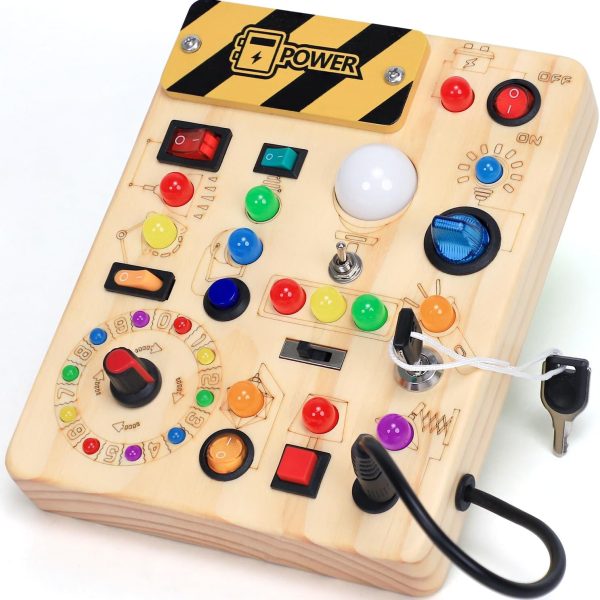
Busy boards blend several practical skills — latches, switches, zips — and are popular with toddlers. Check for small parts and secure battery compartments.
Toy rotation in 3 steps
- Choose 6–8 toys at different skill levels.
- Store the rest out of sight.
- Swap a few every 1–2 weeks, keeping favourites out longer.
Frequently asked questions
Do I need a floor bed?
No. For babies under 12 months, the safest sleep space is still a crib or bassinet that meets safety standards. See our safe sleep guide.
Is Montessori better than other approaches?
There’s no single right way. Many families borrow the ideas that suit them — independence, simplicity and respect for the child.
How much should I intervene?
Watch first, then offer the smallest help needed — show, don’t do it for them.