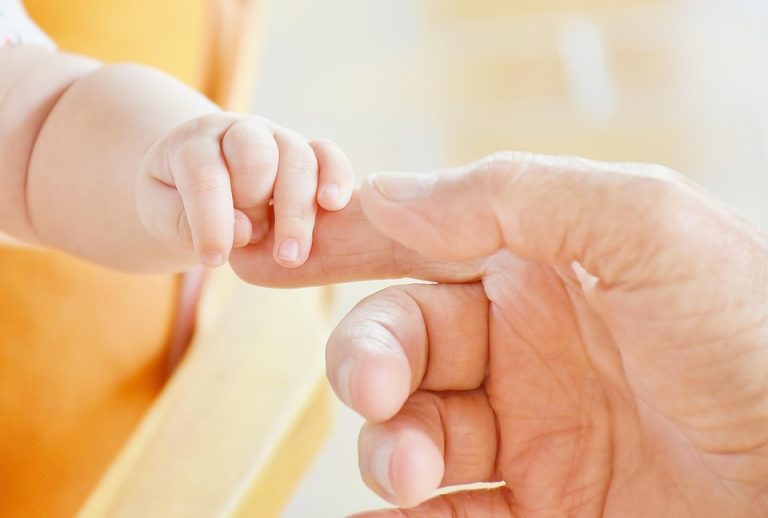
Baby milestones are the skills most babies reach by a certain age — smiling, rolling, sitting, babbling, crawling, standing and more. The checklists below follow the CDC’s milestone checkpoints at 2, 4, 6, 9 and 12 months, which describe what about three-quarters of babies can do by each age. Every baby develops at their own pace, but these markers help you notice when to celebrate — and when to ask your pediatrician.
Key takeaways
- Milestones cover four areas: social/emotional, language, thinking (cognitive) and movement.
- Most babies reach the CDC milestones by the listed age; many reach them earlier.
- Premature babies are usually measured by their adjusted age until around age two.
- Losing a skill your baby once had is always a reason to talk to your pediatrician promptly.
- You know your baby best — if something feels off, ask early. Early support works.
The first month: settling in
There’s no CDC checkpoint before two months, but newborns are busy. Expect strong reflexes (rooting, sucking, grasping and the startle reflex), lifting the head briefly during tummy time, focusing on faces about 8–12 inches away, and calming to familiar voices. Daily supervised tummy time from the first days builds neck and shoulder strength.
2 months
- Social: calms down when spoken to or picked up; looks at your face; seems happy to see you; smiles when you talk or smile at them.
- Language: makes sounds other than crying; reacts to loud sounds.
- Thinking: watches you as you move; looks at a toy for several seconds.
- Movement: holds head up on tummy; moves both arms and both legs; opens hands briefly.
4 months
- Social: smiles on their own to get your attention; chuckles (not yet a full laugh); looks at you, moves or makes sounds to get or keep your attention.
- Language: coos (“oooo”, “aahh”); makes sounds back when you talk; turns head towards the sound of your voice.
- Thinking: opens mouth when they see breast or bottle if hungry; looks at their hands with interest.
- Movement: holds head steady without support when held; holds a toy placed in their hand; swings an arm at toys; brings hands to mouth; pushes up onto elbows on tummy.
This is also when sleep often shifts — see our 4-month sleep regression guide.
6 months
- Social: knows familiar people; likes to look at themselves in a mirror; laughs.
- Language: takes turns making sounds with you; blows “raspberries”; makes squealing noises.
- Thinking: puts things in their mouth to explore them; reaches to grab a toy they want; closes lips to show they don’t want more food.
- Movement: rolls from tummy to back; pushes up with straight arms when on tummy; leans on hands to support themselves when sitting.
Around now, many babies are ready for their first tastes of solid food — our first foods guide explains readiness signs.
9 months
- Social: is shy, clingy or fearful around strangers; shows several facial expressions (happy, sad, angry, surprised); looks when you call their name; reacts when you leave; smiles or laughs at peek-a-boo.
- Language: makes lots of different sounds like “mamamama” and “babababa”; lifts arms up to be picked up.
- Thinking: looks for objects when dropped out of sight; bangs two things together.
- Movement: gets to a sitting position by themselves; moves things from one hand to the other; uses fingers to “rake” food towards themselves; sits without support.
Separation anxiety peaks around now and can affect sleep. Short goodbye–hello games during the day help.
12 months
- Social: plays games with you, like pat-a-cake.
- Language: waves bye-bye; calls a parent “mama,” “dada” or another special name; understands “no” (pauses briefly or stops).
- Thinking: puts something in a container, like a block in a cup; looks for things they see you hide.
- Movement: pulls up to stand; walks holding on to furniture; drinks from a cup without a lid as you hold it; picks things up between thumb and pointer finger.
Many babies take first independent steps between about 9 and 15 months — walking alone isn’t on the 12-month checklist because the normal range is so wide.
How to support development every day
| Area | Simple, everyday ideas |
|---|---|
| Movement | Daily tummy time on the floor; safe space to roll, crawl and pull up; let them reach for toys just out of reach |
| Language | Narrate your day; respond to babbles as if it’s a conversation; read board books; sing |
| Thinking | Peek-a-boo, stacking cups, cause-and-effect toys, hiding a toy under a cloth |
| Social | Face-to-face time, mirrors, copying expressions, consistent caring responses |
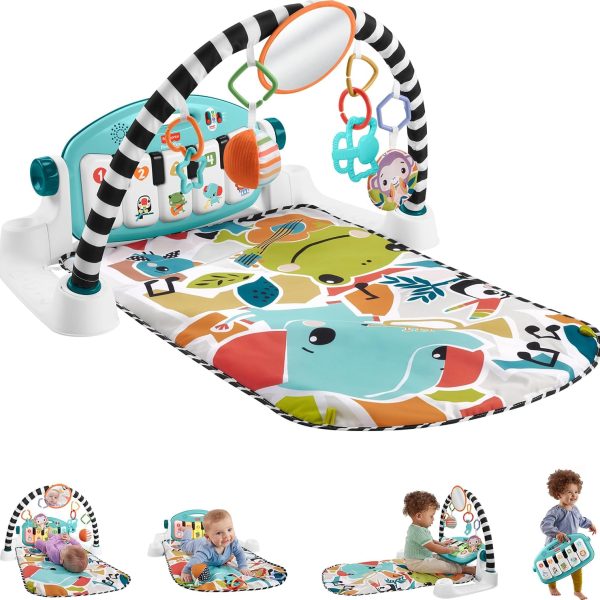
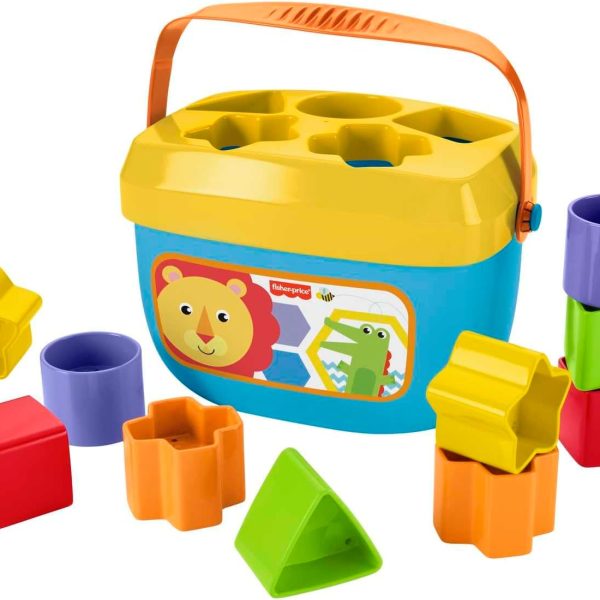
Simple, open-ended toys do the job beautifully. Our toys & learning picks include play gyms, blocks and activity cubes suited to each stage.
- isn’t meeting several milestones for their age;
- loses skills they once had;
- doesn’t respond to sounds or doesn’t seem to see things;
- is very stiff or very floppy, or uses only one side of their body;
- by 12 months, doesn’t babble, point or respond to their name.
In the US, you can also contact your state’s early intervention program directly — you don’t need a referral.
Play that supports each stage

Frequently asked questions
My baby skipped crawling. Is that a problem?
Not necessarily. Some babies scoot, roll or go straight to pulling up and walking. What matters is steady progress in movement overall.
Do I use adjusted age for a premature baby?
Yes — usually until about age two. Subtract the weeks your baby was born early from their actual age.
Are boys slower to talk than girls?
On average there are small differences, but they’re not a reason to wait. If language seems behind, ask early.