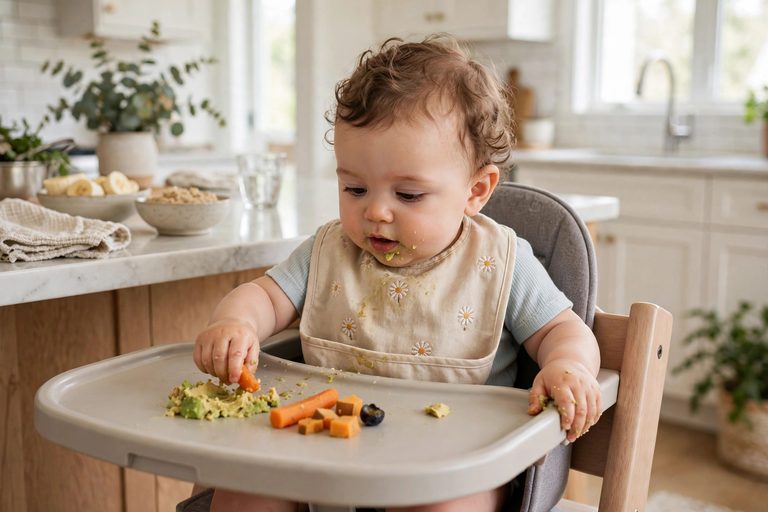
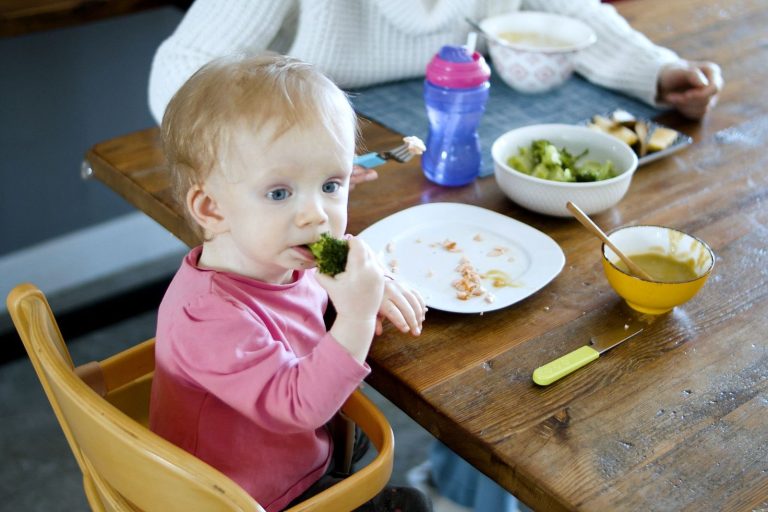
The best first foods for babies are iron-rich foods and simple vegetables, fruits and grains offered in a texture your baby can manage — starting at around six months, when they show signs of readiness. Iron matters most: babies’ iron stores run low by about six months, so foods like meat, beans, lentils, eggs and iron-fortified cereals deserve a place early on. Breast milk or formula remains the main source of nutrition until the first birthday.
Key takeaways
- Start solids around 6 months, when your baby can sit with little support, has good head control and shows interest in food.
- Prioritise iron: meat, fish, beans, lentils, eggs and iron-fortified cereals.
- Introduce common allergens, including peanut and egg, early and regularly — ask your pediatrician first if your baby has severe eczema or a known food allergy.
- No honey before 12 months, no cow’s milk as a drink before 12 months, and no juice or added salt and sugar.
- Vary grains rather than relying on rice cereal, and avoid choking hazards like whole grapes, nuts and popcorn.
Is your baby ready?
Age is a guide, but readiness signs matter more. Most babies are ready at about six months — not before four months. Look for a baby who:
- sits up with little or no support and holds their head steady;
- opens their mouth when food comes towards them;
- can move food to the back of the mouth and swallow, rather than pushing it straight back out with their tongue;
- brings toys and objects to their mouth.
Babies born prematurely may need to start based on their adjusted age — ask your pediatrician.
The best first foods, by group
Iron-rich foods (start these early)
| Food | Why it’s great | How to serve at 6 months |
|---|---|---|
| Beef, lamb, dark-meat chicken | Easily absorbed iron and zinc | Puréed, finely minced, or soft strips to suck on |
| Lentils and beans | Iron, protein, fibre | Mashed, or soft whole lentils mixed into food |
| Eggs | Protein, choline, an important early allergen | Well-cooked: scrambled, or omelette strips |
| Iron-fortified infant cereal | Reliable iron source | Mixed with breast milk or formula — vary oat, barley and multigrain |
| Salmon and other low-mercury fish | Protein, omega-3 fats | Flaked, cooked through, bones removed |
Pair plant sources of iron (beans, lentils, cereals) with vitamin C foods like tomato, broccoli, strawberries or citrus to boost absorption.
Vegetables and fruits
- Avocado: creamy, rich in healthy fats — mash or offer thick spears.
- Sweet potato, carrot, squash, pumpkin: steamed or roasted until very soft.
- Broccoli and cauliflower: steamed florets with a “handle” are easy to grab.
- Banana, ripe pear, peach, mango: soft and naturally sweet; mash or cut into finger-length pieces.
- Berries: mash or flatten blueberries; quarter strawberries for older babies.
Offer vegetables repeatedly — babies may need 8–10 or more tries before accepting a new taste. A grimace isn’t a “no.”
Grains and dairy
- Oats, barley, quinoa, whole-wheat pasta and bread (wheat is also an allergen to introduce).
- Plain, full-fat yogurt and small amounts of cheese are fine from six months — just not cow’s milk as a main drink.
Introducing allergens
Current US guidance is to introduce common allergenic foods — peanut, egg, cow’s milk products, tree nuts, wheat, soy, fish, shellfish and sesame — around six months, alongside other foods, and then keep them in the diet regularly. Early, regular exposure to peanut in particular has been shown to reduce the risk of peanut allergy.
- Offer peanut as smooth peanut butter thinned with water, breast milk or formula, or as peanut powder stirred into purée — never whole nuts or thick spoonfuls of nut butter.
- Introduce one new allergen at a time, at home, earlier in the day so you can watch for a reaction.
- If your baby has severe eczema or an egg allergy, talk to your pediatrician before introducing peanut — they may recommend testing or a supervised first taste.
Mild redness around the mouth is common and often just irritation. Hives, swelling, vomiting, coughing or wheezing after a new food need medical attention — call emergency services for breathing difficulty or swelling of the face, lips or tongue.
Foods to avoid in the first year
- Honey (raw or cooked, including in baked goods) — risk of infant botulism.
- Cow’s milk or plant milks as a main drink — they don’t provide the right nutrition and can affect iron levels. Small amounts in cooking are fine.
- Juice — not recommended before 12 months.
- Added salt and sugar, including salty processed foods and sweets.
- High-mercury fish such as shark, swordfish and king mackerel.
- Unpasteurised dairy, raw or undercooked eggs, meat and fish.
- Choking hazards: whole nuts, whole grapes or cherry tomatoes (quarter them lengthwise), popcorn, hard raw vegetables and apple, hot dog rounds, hard candy, and globs of nut butter.
How to start: a simple first week
- Pick a calm time when your baby isn’t too hungry or tired — often an hour after a milk feed.
- Seat them upright in a high chair with a harness, feet supported if possible.
- Start small: a few teaspoons of a smooth purée or a soft finger food, once a day.
- Follow their lead. Turning away or closing their mouth means “done.”
- Offer sips of water from an open or straw cup with meals.
- Build up to two meals a day over the following weeks, then three by about nine months.
Purées and finger foods are both fine — many families combine them. If you’re drawn to self-feeding, our baby-led weaning guide explains how to cut and serve foods safely, and our feeding schedule shows how meals and milk fit together month by month.
Frequently asked questions
Do I need to wait days between new foods?
Not strictly. Many experts now say there’s no need for long gaps between most new foods. It is still sensible to introduce the common allergens one at a time so you can spot a reaction.
How much should my baby eat?
At first, very little — a teaspoon or two is a success. Let your baby’s appetite guide amounts and keep milk feeds going.
Can I give water?
Small sips (up to about 4–8 oz a day in total) from a cup are fine from six months. Before six months, babies don’t need water.