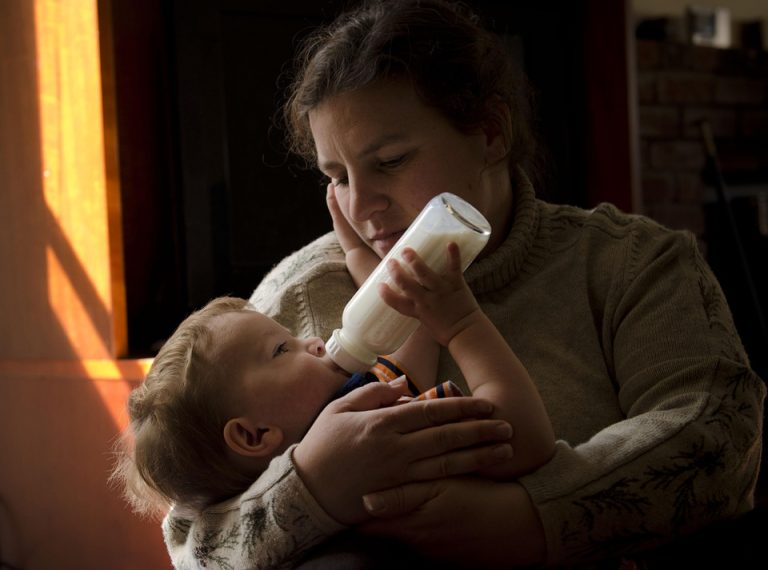
In the first months, the best baby feeding schedule is responsive feeding: offering milk whenever your baby shows hunger cues — typically 8–12 times a day for newborns. A more predictable rhythm usually emerges by three to four months. Solids start around six months and build to three meals plus snacks by the first birthday, while breast milk or formula stays the main source of nutrition all year. Here’s what a typical day looks like at each stage.
Key takeaways
- Newborns: feed on demand, usually every 2–3 hours (breastfed) or 3–4 hours (formula-fed), including at night.
- Diapers and weight gain tell you more than the clock or the ounces.
- Around 6 months: start solids once a day, building to 2–3 meals by 8–9 months.
- At 12 months: three meals, two snacks, and whole milk from a cup (about 16–24 oz a day).
- Follow hunger and fullness cues at every stage — never force a feed or a finished plate.
Feeding at a glance, month by month
| Age | Milk feeds in 24 h | Typical formula amount | Solid meals |
|---|---|---|---|
| 0–1 month | 8–12 | 1–3 oz, rising to ~4 oz | None |
| 1–3 months | 7–9 | 4–5 oz | None |
| 4–5 months | 6–8 | 4–6 oz | None yet (start at ~6 months) |
| 6 months | 5–7 | 6–8 oz | 1 small meal |
| 7–8 months | 4–6 | 6–8 oz | 2 meals |
| 9–11 months | 3–5 | 6–8 oz | 3 meals (+ 1 snack) |
| 12 months | Whole milk in a cup, ~16–24 oz/day | — | 3 meals + 2 snacks |
Breastfed babies usually feed more often than formula-fed babies, and amounts aren’t measurable — follow cues and diapers instead. Formula amounts are averages; see our formula feeding guide for details.
0–3 months: feed on cue
Responsive feeding builds breast milk supply, supports healthy growth and teaches your baby that their needs will be met. Watch for early hunger cues — stirring, rooting, sucking on hands, lip-smacking — and offer a feed before crying starts. Expect cluster feeding (several feeds close together, often in the evening) and growth spurts around two to three weeks, six weeks and three months.
Signs of enough milk: 6+ wet diapers a day after day five, regular yellow stools in breastfed newborns, steady weight gain, and a baby who seems satisfied after most feeds. Our breastfeeding guide has a day-by-day diaper chart.
4–6 months: a rhythm appears
Feeds become bigger and further apart, and many babies settle into a predictable pattern — often feeding on waking, then every three to four hours through the day. Some still need one or two night feeds; that’s normal.
Don’t start solids before four months, and for most babies wait until around six months when readiness signs appear. Our first foods guide lists the signs and the best foods to begin with.
Sample day: 6–8 months
| Time | Feed |
|---|---|
| 7:00 am | Breast milk or formula |
| 8:30 am | Breakfast: iron-fortified oatmeal with mashed fruit |
| 11:00 am | Breast milk or formula |
| 12:30 pm | Lunch (from ~7–8 months): lentils, soft vegetables |
| 3:00 pm | Breast milk or formula |
| 5:30 pm | Dinner: soft fish or meat, vegetables |
| 7:00 pm | Breast milk or formula before bed |
Offer milk first in the early weeks of solids, then gradually move solids before milk by around nine months. Offer water from an open or straw cup with meals.
Sample day: 9–12 months
| Time | Feed |
|---|---|
| 7:00 am | Milk feed |
| 8:00 am | Breakfast: scrambled egg strips, toast, soft fruit |
| 10:00 am | Snack: yogurt or soft cheese |
| 12:00 pm | Lunch: bean or chicken, pasta, vegetables |
| 2:30 pm | Milk feed |
| 5:30 pm | Dinner: family food adapted — no added salt |
| 7:00 pm | Milk feed before bed |
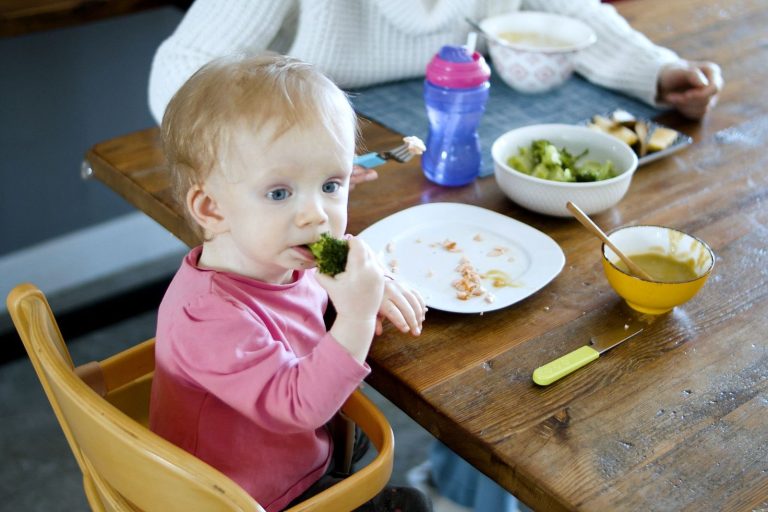
By now, your baby can eat most family foods cut into safe sizes. Keep offering iron-rich foods daily and keep allergens like peanut and egg in the rotation. If your baby enjoys self-feeding, our baby-led weaning guide explains safe shapes and textures.
Switching to cow’s milk at 12 months
From the first birthday, most babies can drink whole cow’s milk from a cup (or another option your pediatrician recommends). Aim for about 16–24 oz a day — more can fill your toddler up and crowd out iron-rich foods. Breastfeeding can continue as long as you both wish.
Common feeding challenges
Refusing solids
Teething, illness, tiredness or simply not being hungry can all play a part. Keep meals relaxed, offer foods again on another day, and eat together. Refusal that persists, or that comes with weight loss, needs a check-up.
Worried about overfeeding
Babies are good at self-regulating when we follow their cues. With bottles, paced feeding helps. Avoid using food or milk as the only way to soothe.
Picky phases
Normal, especially from 12 months. Serve one familiar food alongside new ones, and let your child decide how much to eat from what you offer.
- has fewer wet diapers, very dark urine, or seems lethargic;
- isn’t gaining weight, or drops across growth-chart lines;
- regularly coughs, chokes or struggles to breathe during feeds;
- has hives, swelling or vomiting after a new food (call emergency services for breathing difficulty).
Frequently asked questions
Should I wake my newborn to feed?
In the first couple of weeks, until your baby is back to birth weight, your pediatrician may advise waking them if more than about three to four hours pass. After that, most healthy babies can wake on their own.
How do I know if my baby is still hungry after solids?
Reaching for food, opening their mouth and leaning forward mean “more.” Turning away, closing their mouth or playing with food mean “done.”
Can I drop night feeds?
Many babies naturally drop night feeds between six and twelve months. Talk to your pediatrician before night-weaning a younger baby or one who is gaining weight slowly.