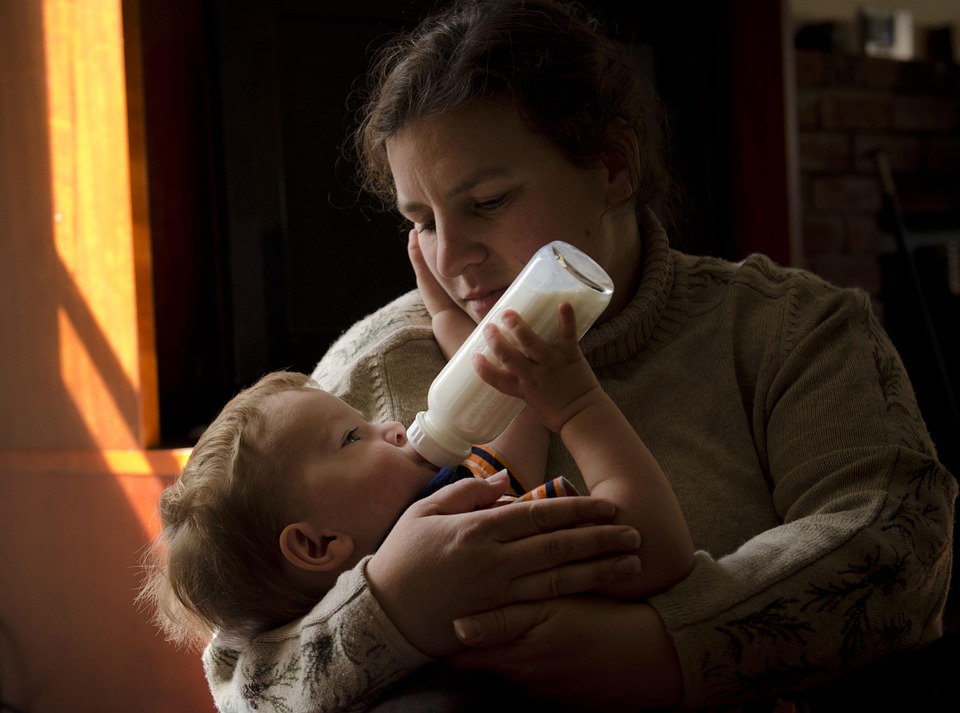
Whether you’re bottle-feeding formula, expressed breast milk or both, the same few habits make feeds calmer and safer: a slow-flow nipple, a semi-upright hold, paced feeding that lets your baby set the speed, and clean equipment. This guide covers choosing bottles and nipples, step-by-step paced feeding, cleaning, common problems, and moving to a cup.
Key takeaways
- Start with a slow-flow (newborn) nipple and only move up if feeds become frustratingly slow.
- Paced feeding — bottle more horizontal, regular pauses — mimics breastfeeding and helps prevent overfeeding.
- Never prop a bottle or put a baby to bed with one.
- Clean bottles after every feed; sanitise daily for babies under 3 months, premature, or with weakened immunity.
- Begin offering an open or straw cup around 6 months and aim to finish with bottles by about 12–18 months.
Choosing bottles and nipples
| Material | Good for | Keep in mind |
|---|---|---|
| Plastic (BPA-free) | Light, affordable, unbreakable | Replace if scratched or cloudy |
| Glass | Durable, easy to clean, no plastic | Heavier; use a silicone sleeve |
| Silicone | Soft, squeezable, lightweight | Can be harder to read measurements |
| Stainless steel | Very durable | Can’t see the milk level; pricier |
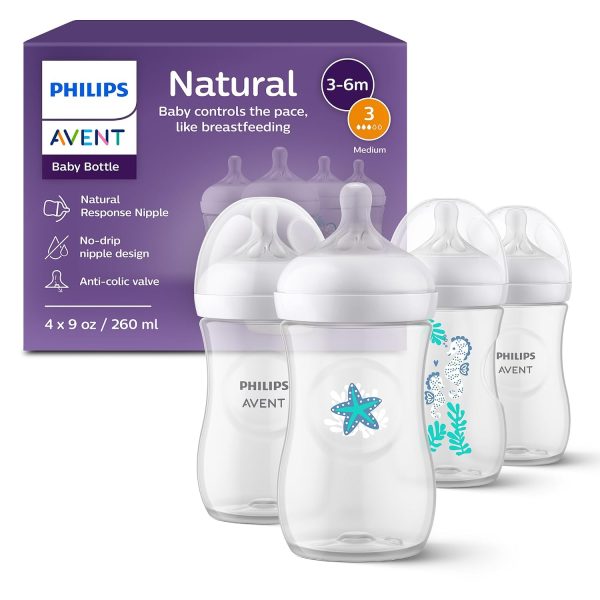
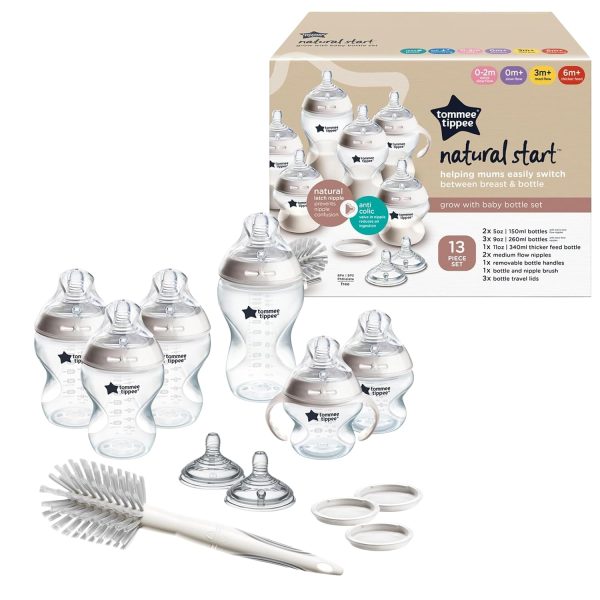
There’s no single “best” bottle — babies have preferences. Buy one or two styles before stocking up. Anti-colic vent systems may help babies who swallow a lot of air. Browse our feeding picks for bottles, brushes and sterilisers.
Nipple flow: Most babies do best on the slowest flow for months. Signs a nipple is too fast: gulping, coughing, milk leaking from the mouth, finishing very quickly. Too slow: frustration, collapsing nipple, feeds taking longer than about 30 minutes.
Paced bottle feeding, step by step
- Hold your baby semi-upright, head supported and slightly higher than their tummy.
- Brush the nipple against their lips and wait for them to open wide and draw it in.
- Keep the bottle close to horizontal — just tilted enough to fill the tip with milk.
- Pause every 20–30 sucks by tipping the bottle down so milk leaves the nipple, or by gently removing it to the lip.
- Switch sides halfway through, like breastfeeding, for eye contact and comfort.
- Stop when your baby shows fullness cues — slowing, turning away, relaxed hands — even if there’s milk left.
A paced feed usually takes 10–20 minutes. It’s especially helpful for breastfed babies who also take bottles, because it keeps the effort similar at breast and bottle.
Preparing bottles
- Formula: follow the label exactly — water first, then levelled scoops. See our formula feeding guide for safe preparation and storage.
- Breast milk: thaw frozen milk in the fridge or in a bowl of warm water, swirl (don’t shake hard) and use within the CDC time limits in our breastfeeding guide.
- Warming is optional. If your baby prefers it warm, stand the bottle in warm water or use a bottle warmer. Never use a microwave.
Cleaning and sanitising
- Take bottles apart completely and rinse under running water after each feed.
- Wash in hot, soapy water with a dedicated bottle brush (or on the top rack of a dishwasher if the maker says it’s safe).
- Rinse and air-dry on a clean rack — don’t dry with a tea towel.
- Sanitise before first use, and at least daily for babies under three months, born prematurely or with weakened immune systems — by boiling for 5 minutes, steam, or a dishwasher sanitise cycle.
- Replace nipples at the first sign of cracks, thinning or stickiness.
Burping
Burp halfway through and at the end of each feed. Try upright over your shoulder, sitting on your lap with chin and chest supported, or face-down across your lap. Some babies rarely need to burp — if they’re comfortable, that’s fine.
Common problems
Bottle refusal (often in breastfed babies)
- Have another caregiver offer the bottle, ideally when your baby is calm and only slightly hungry.
- Try a different nipple shape or a slower flow, and milk at body temperature.
- Offer in a different position or while walking.
- Keep sessions short and positive. If refusal persists, a cup can work even for young babies — ask your pediatrician or a lactation consultant.
Gas, spit-up and fussiness
Paced feeding, a slower nipple, more frequent burping and keeping your baby upright for 20–30 minutes afterwards usually help. Persistent forceful vomiting, poor weight gain or signs of pain need a pediatric check.
Overfeeding
Bottles make it easy to finish “just the last ounce.” Following fullness cues and paced feeding protect your baby’s natural appetite regulation.
From bottle to cup
Offer small sips of water from an open or straw cup with meals from about six months. Around 12 months, start replacing bottle feeds with milk in a cup — often the midday bottle first, then morning, with the bedtime bottle last. Aim to have finished with bottles by about 18 months; long-term bottle use, especially in bed, is linked to tooth decay.
- regularly coughs, chokes or turns blue during feeds;
- has fewer wet diapers or isn’t gaining weight;
- vomits forcefully, or has blood in vomit or stool.
Bottles and cleaning

Frequently asked questions
How many bottles do I need?
For exclusive bottle-feeding, 6–8 bottles cover a day without constant washing. For occasional bottles, 2–4 is plenty.
Do I have to sterilise bottles every time?
Not after every feed for healthy, full-term babies over three months — thorough washing is enough. Sanitise daily for younger or vulnerable babies.
Is it okay to reuse leftover milk?
No. Once your baby has fed from a bottle, use leftover formula within 1 hour and breast milk within 2 hours, then discard.