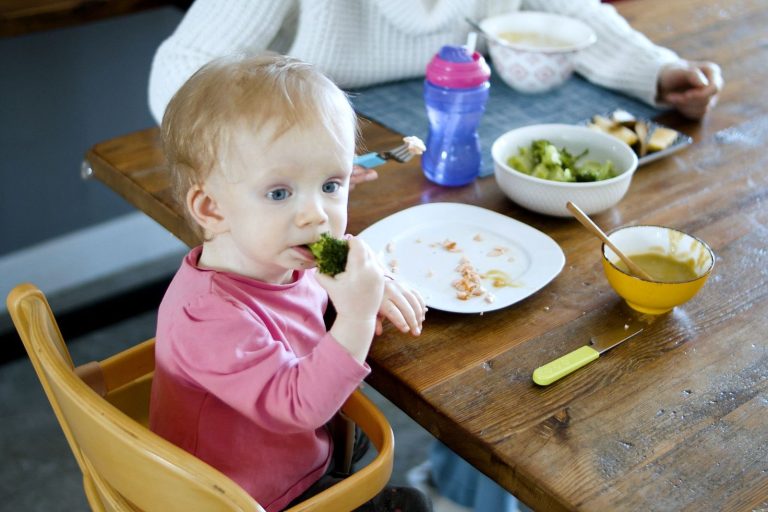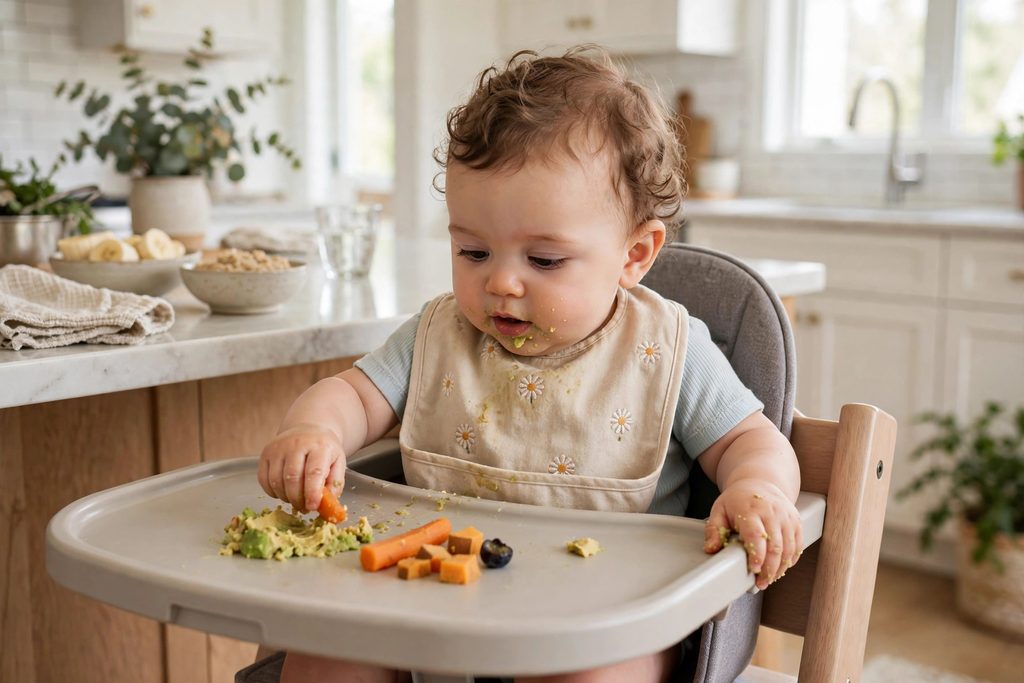
Baby-led weaning (BLW) is a way of starting solids in which your baby feeds themselves soft, appropriately shaped pieces of real food from the start, instead of being spoon-fed purées. Done safely — starting around six months, with soft finger-length foods, an upright seat and constant supervision — it can be a relaxed, social way to introduce food. Many families happily mix BLW with some spoon-feeding.
Key takeaways
- Wait for readiness signs at about six months: sitting with little support, good head control, interest in food and bringing objects to the mouth.
- Serve soft foods that squash easily between your finger and thumb, cut into finger-length strips at first.
- Gagging is a normal, noisy safety reflex; choking is silent and needs immediate action. Learn infant first aid.
- Offer iron-rich foods daily and introduce common allergens early.
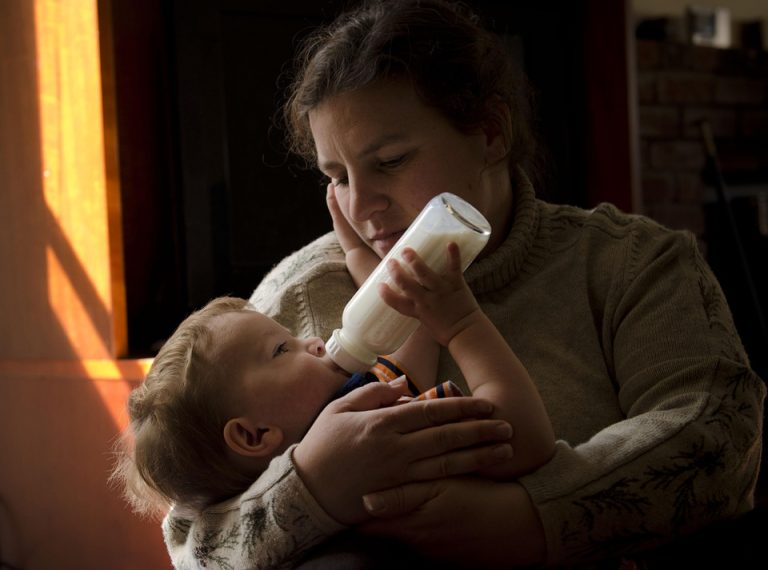
- Breast milk or formula is still the main source of nutrition in the first year.
Why parents choose baby-led weaning
- Self-regulation: babies decide how much to eat, which may support healthy appetite cues.
- Motor skills: grasping, bringing food to the mouth and chewing build coordination.
- Family meals: babies can eat (adapted) versions of what everyone else is eating.
- Variety of textures from the start, which may help acceptance of lumpier foods later.
Research suggests that, done well, BLW does not increase the risk of choking compared with spoon-feeding. The safety comes from the details below.
Is your baby ready?
Babies should be around six months old (not before) and able to sit upright with minimal support, hold their head steady, reach for and grab objects, and bring them to their mouth. They should also have lost the tongue-thrust reflex — the automatic pushing-out of anything placed on the tongue — so they can move food to the back of the mouth to swallow.
How to cut and serve food safely
| Age / skill | Best shapes | Examples |
|---|---|---|
| ~6 months (palmar grasp) | Finger-length strips, about two adult fingers wide | Avocado spears, roasted sweet potato wedges, banana with peel partly on as a handle, omelette strips, soft-cooked broccoli florets |
| ~8–9 months (pincer grasp developing) | Smaller, bite-size soft pieces | Flaked salmon, quartered blueberries (flattened), soft pasta, small pieces of soft-cooked chicken thigh |
| Any age | Mashed or spreadable on a pre-loaded spoon | Yogurt, lentil dal, oatmeal, thinned peanut butter on toast strips |
The squish test: food should flatten easily when pressed between your thumb and forefinger. If it doesn’t, cook it longer, grate it, or choose something else.
Foods to avoid or modify
- Round, firm foods: whole grapes, cherry tomatoes and blueberries — quarter lengthwise or flatten.
- Hard raw vegetables and apple — steam until soft, or grate.
- Whole nuts and seeds, popcorn — never in the first years. Offer nuts as thinly spread butter or ground into food.
- Hot dog and sausage rounds — cut lengthwise into thin strips if offered at all.
- Honey before 12 months, and added salt and sugar — cook your baby’s portion before seasoning the family’s.
Our best first foods guide lists nutrient-rich options and the full list of foods to avoid in the first year.
Gagging vs choking
| Gagging (normal) | Choking (emergency) |
|---|---|
| Noisy: coughing, sputtering, retching | Silent or weak, high-pitched sounds |
| Face may go red, eyes watery | Lips or face turning blue or pale |
| Tongue pushes forward; baby works food out | Can’t cough, cry or breathe effectively |
| Stay calm and let them work it out | Act immediately: infant back blows and chest thrusts, and call emergency services |
Gagging is common in the first weeks as babies learn to move food around their mouths, and usually eases as skills improve. We strongly recommend an infant CPR and choking first-aid class before you start.
- Your baby sits fully upright in a high chair — never reclined, in a car seat, stroller or while moving.
- An adult watches every bite, the whole meal.
- Only your baby puts food in their mouth — don’t place pieces in for them.
Nutrition: iron and allergens
Because babies eat small amounts at first, make every day include an iron-rich food: soft-cooked meat strips, flaked fish, egg, beans, lentils or iron-fortified cereal on a pre-loaded spoon. Introduce common allergens — peanut, egg, dairy, wheat, soy, fish, shellfish, sesame and tree nuts — early and keep offering them regularly. If your baby has severe eczema or a known food allergy, check with your pediatrician first.
Making it work day to day
- Timing: offer food when your baby is alert and not too hungry — milk first for the early months.
- Two or three choices per meal is plenty; too many can overwhelm.
- Expect mess. A wipe-clean mat under the high chair and long-sleeved bibs help.
- Eat together so your baby can copy you.
- Patience: much of the food will be squished and dropped at first. That’s learning.
Our feeding picks include easy-clean gear, and the feeding schedule guide shows how meals grow from one to three a day.
Frequently asked questions
Can I combine BLW and purées?
Absolutely. Many families offer finger foods alongside spoon-fed or pre-loaded spoons. It’s not all or nothing.
Does my baby need teeth for BLW?
No. Babies’ gums are strong enough to mash soft foods.
What if my baby isn’t swallowing much?
That’s normal early on. Milk still provides most nutrition. If intake hasn’t increased by around nine months, or weight gain slows, talk to your pediatrician.