Tummy time — supervised play on the stomach while awake — builds the neck, shoulder, arm and core strength babies need to roll, sit, crawl and eventually walk. It also helps prevent flat spots on the back of the head. Start from the first days home with a few minutes at a time, several times a day, and build toward about an hour in total per day by around 3 months, spread across many short sessions.
Key takeaways
- Back to sleep, tummy to play: tummy time is only while awake and watched.
- Start with 2–3 minutes, 2–3 times a day, and increase gradually.
- Chest-to-chest tummy time on a parent counts — and is often a newborn’s favourite.
- Short, frequent sessions beat one long, tearful one.
How much tummy time by age
| Age | Daily goal (total) | What it looks like |
|---|---|---|
| Newborn – 1 month | 10–15 minutes | A few minutes after diaper changes; on your chest |
| 1–2 months | 20–30 minutes | Lifts head briefly, turns side to side |
| 3 months | About 60 minutes | Pushes up on forearms, head steady |
| 4–6 months | 60–90 minutes | Straight-arm push-ups, reaching, pivoting, rolling |
Totals are approximate; follow your baby’s tolerance. Once your baby can roll and move around, floor play naturally includes plenty of tummy time.
Positions to try
- Chest to chest: recline and lay your baby on your chest. Your face is the best motivator.
- Lap time: lay your baby across your knees, belly down, with a hand on their back.
- Rolled towel: a small towel roll under the chest and armpits makes lifting easier.
- Side-lying: supported side play is a gentle option for babies who strongly protest.
- Football carry: carrying your baby face-down along your forearm counts too.
Making it fun
- Get down at eye level — sing, talk and make faces.
- Use a mirror, high-contrast cards or a crinkly toy just out of reach.
- Try right after a diaper change, when your baby is alert but not hungry or just fed.
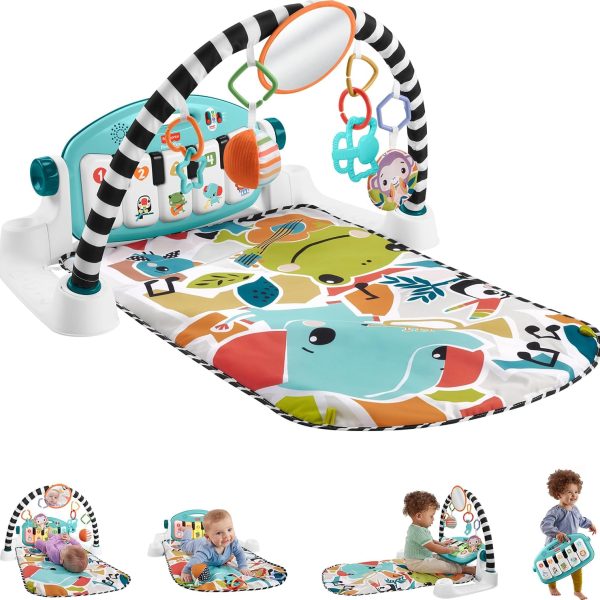
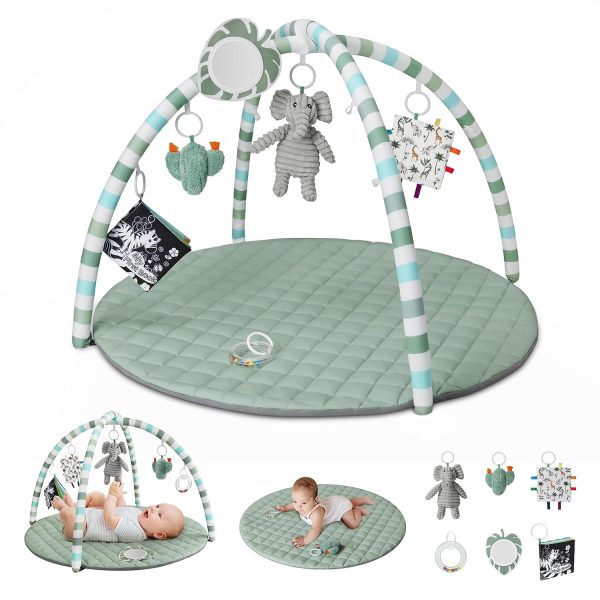
- A soft play mat with hanging toys keeps things interesting as your baby grows.
If your baby hates tummy time
That’s very common. Keep sessions short (even 30 seconds), stop before tears, and try again later. Chest-to-chest time counts. Babies who had reflux, were born early, or spend lots of time in car seats and carriers may need a little more patience.
- your baby always turns their head to one side or has a persistent head tilt;
- you notice a flat area on the head that isn’t improving;
- your baby can’t lift their head during tummy time by about 3 months, or seems very floppy or stiff.
Frequently asked questions
Can tummy time be on a bed?
A firm floor mat is better. Soft surfaces make lifting harder and are a fall risk.
Is tummy time after feeding okay?
Wait 20–30 minutes after a feed to reduce spit-up.
Does carrying my baby in a carrier count?
Upright carrying helps with neck strength, but floor time is still important for pushing up and moving.
Next steps: baby milestones by month and the best toys by age.