Babies don’t need many toys — they need the right kind of play for their stage and, above all, you. The best toys are simple and open-ended: things to look at, grasp, mouth, bang, stack, push and figure out. Electronics and screens add little; a few well-chosen toys, rotated every week or two, go much further.
Key takeaways
- Your face, voice and books are the most powerful “toys” in the first year.
- Choose toys that match the skill your baby is working on right now.
- Open-ended toys (blocks, balls, stacking cups) grow with your child.
- Check age labels and avoid small parts, button batteries, magnets and long cords.
0–3 months: looking and listening
- High-contrast black-and-white cards or books.
- A play gym with hanging toys for kicking and batting.
- Soft rattles your baby can hold briefly.
- Safe, unbreakable mirrors for tummy time.
Read our tummy time guide for floor-play ideas.
4–6 months: reaching, grasping, mouthing
- Easy-to-grip rattles and teethers.
- Crinkly and textured toys.
- Toys that move or make sounds when touched — simple cause and effect.
6–9 months: sitting, banging, dropping
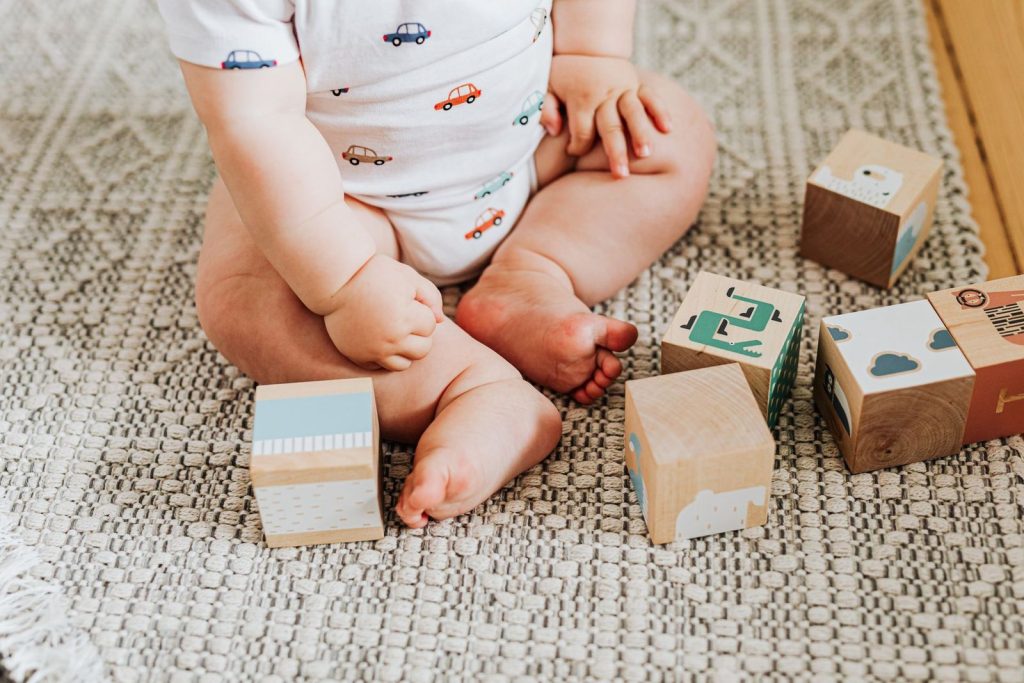
- Soft or lightweight blocks to bang together and knock down.
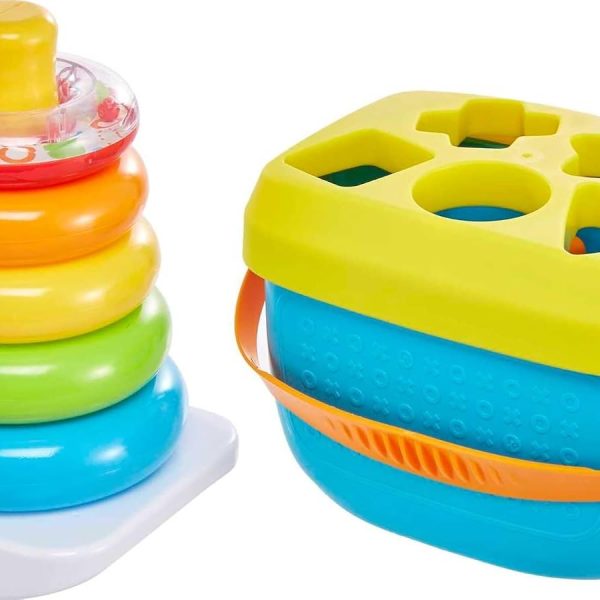
- Stacking cups and nesting toys.
- Balls to roll back and forth.
- Board books with flaps and textures.
9–12 months: crawling, cruising, figuring things out
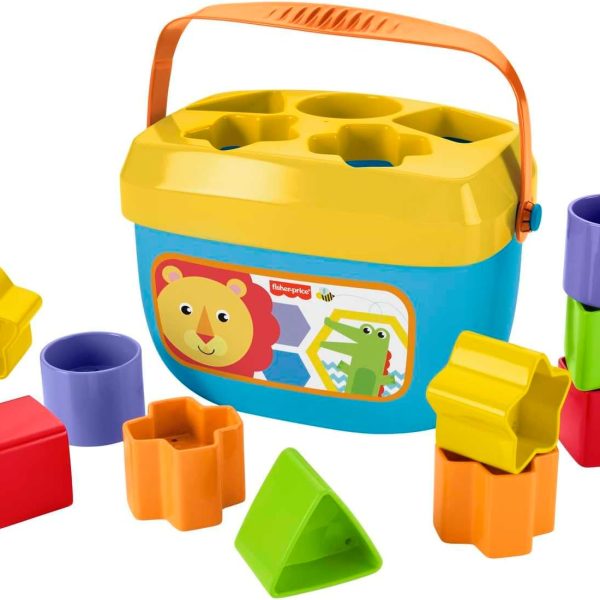
- Shape sorters and simple puzzles with knobs.
- Activity cubes with beads, gears and doors.
- Push toys once your baby is pulling up (choose stable ones).
- Toy phones, cups and spoons for pretend play.
12–24 months: building, pretending, moving
- Stacking rings, larger blocks and simple building sets.
- Pretend-play kitchens, dolls and animals.
- Chunky crayons and large paper.
- Ride-on and push-along toys.
- Music: drums, shakers and songs together.
Toy safety checklist
- Size: anything that fits through a toilet-paper tube is a choking hazard for under-3s.
- Button batteries and magnets: extremely dangerous if swallowed — battery compartments must be screwed shut.
- Cords and strings longer than about 7 inches (18 cm) are a strangulation risk.
- Check recalls at CPSC.gov, especially for second-hand toys.
- Keep toys out of the crib during sleep.
Frequently asked questions
How many toys does a baby need?
Fewer than you think. Keep 6–8 out at a time and rotate the rest.
Are electronic “learning” toys better?
Not really. Simple toys that need your baby to do the work — and you to join in — build more language and problem-solving.
When can babies have toys with small parts?
Not until age 3, and only if they no longer mouth objects. Follow the age label.
See also: Montessori at home and milestones by month.