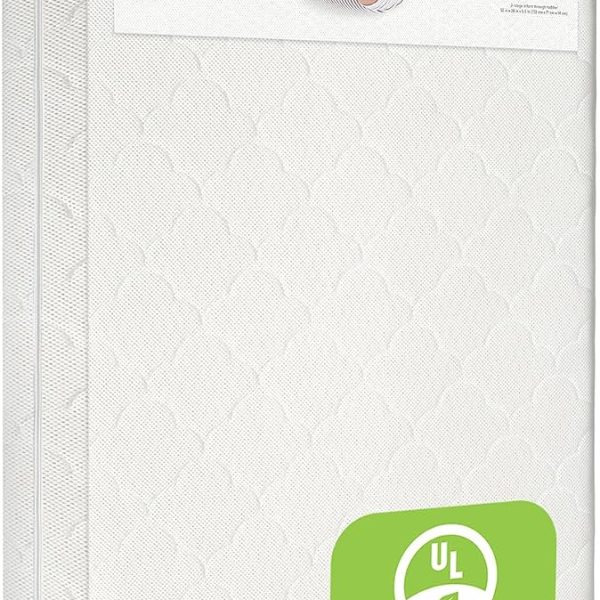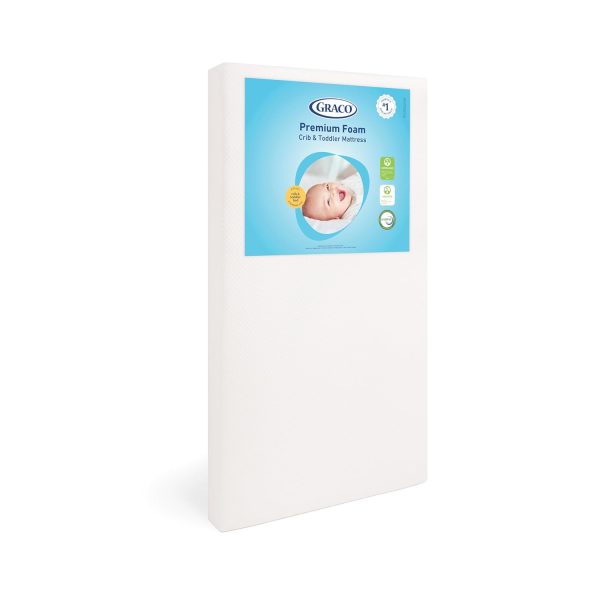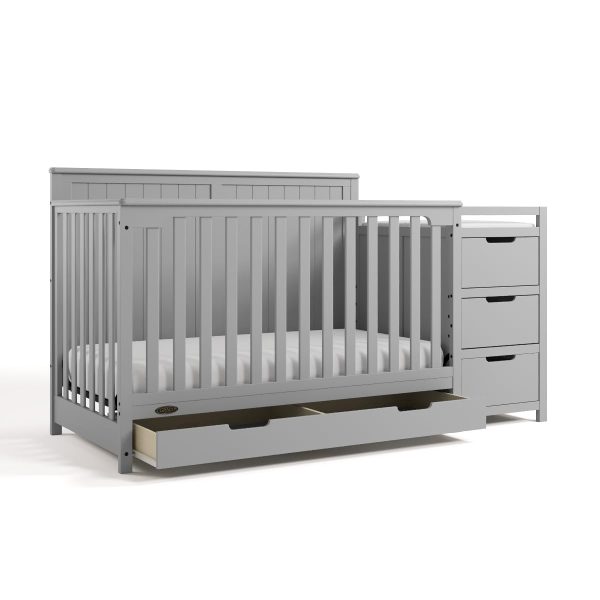
A crib mattress has one job above all others: to give your baby a firm, flat surface that fits the crib snugly. Softness, thickness and price matter far less. A good mattress should not indent noticeably under your baby’s head, should spring back quickly when pressed, and should leave no more than a two-finger gap at the edges of the crib.
Key takeaways
- Firm is safest for infants: soft surfaces increase the risk of suffocation.
- Check the fit: no more than two fingers’ width between the mattress and the crib frame.
- Use only a tight fitted sheet — no toppers, pillows or extra padding.
- Dual-sided mattresses have a firm infant side and a slightly softer toddler side.
- Waterproof or washable covers make accidents much easier to deal with.
The firmness test
Press your hand into the centre and edges of the mattress. It should feel firm, snap back to shape immediately, and not conform to the shape of your hand. The AAP describes a safe sleep surface as one that keeps its shape and doesn’t indent or conform to the shape of your baby’s head. Adult memory foam, pillowtops and toppers are never suitable for infants.
The fit test
Standard full-size crib mattresses in the US are at least 27¼ × 51⅝ inches and no more than 6 inches thick. Place the mattress in the crib, push it to one corner and try to fit fingers into the gap on the opposite side. If you can fit more than two fingers, the mattress is too small for that crib.
Types of crib mattress
| Type | Pros | Watch out for |
|---|---|---|
| Foam | Light (easy sheet changes), affordable, firm | Choose high-density foam that doesn’t sag |
| Innerspring | Durable, heavier, consistent support | Heavier to lift; check coil count isn’t the only selling point |
| Breathable / fibre core | Airflow through the core, often fully washable | Higher price; check it’s still firm |
| Dual-sided | Firm infant side, cushier toddler side — lasts for years | Remember which side is which |
Covers, waterproofing and certifications
- Waterproof or water-resistant covers protect the core from diaper leaks and spit-up. A removable, machine-washable cover is a bonus.
- Certifications: labels such as GREENGUARD Gold (low chemical emissions) or CertiPUR-US (foam content) give extra reassurance about materials. They are not a substitute for checking firmness and fit.
- Waterproof pads: only use thin, fitted pads designed for the exact mattress size.
Bedding for the mattress
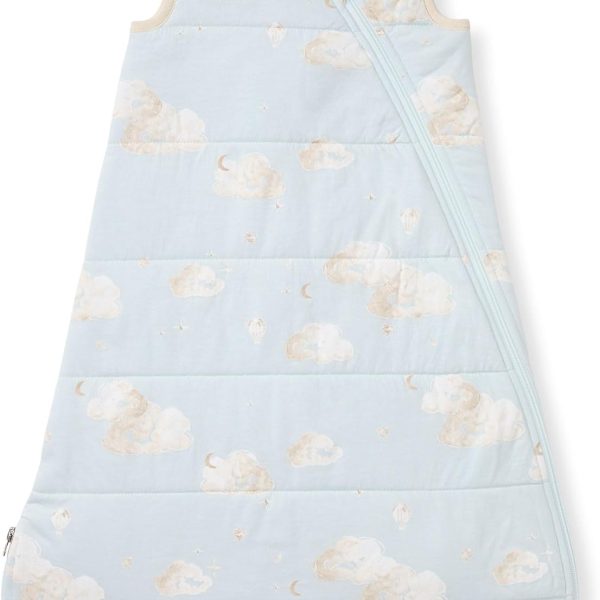
All your baby needs on top is a fitted sheet made for crib mattresses. Keep the crib empty — no bumpers, quilts or pillows — and use a wearable blanket for warmth instead.
New or second-hand?
A new mattress is usually the safer choice: older mattresses can sag, harbour mould or have damaged covers. If you do reuse one (for example, from an older sibling), check that it is still firm, flat, clean, dry and fits the crib perfectly.
When to replace a crib mattress
- It sags or has soft spots.
- The cover is torn and the core is exposed.
- It no longer fits the crib snugly.
- It has been wet for long periods or shows mould.
Frequently asked questions
Is a thicker mattress better?
Not necessarily. Federal rules cap full-size crib mattresses at 6 inches thick. Firmness and fit are what matter.
Can I add a topper to make it more comfortable?
No. Babies don’t need softness, and toppers create a suffocation risk.
When can my child use the softer toddler side?
Most manufacturers suggest switching around 12 months or when your child moves to a toddler bed. Check your mattress’s instructions.
Still deciding on the crib itself? See our guide to bassinet vs crib and the safe sleep checklist.