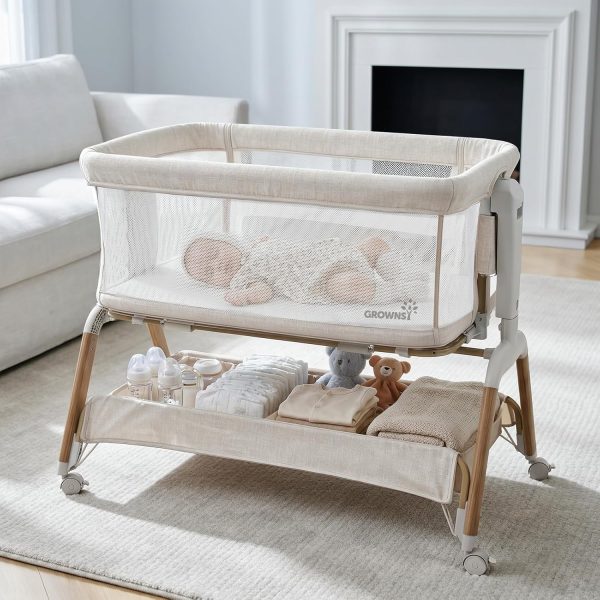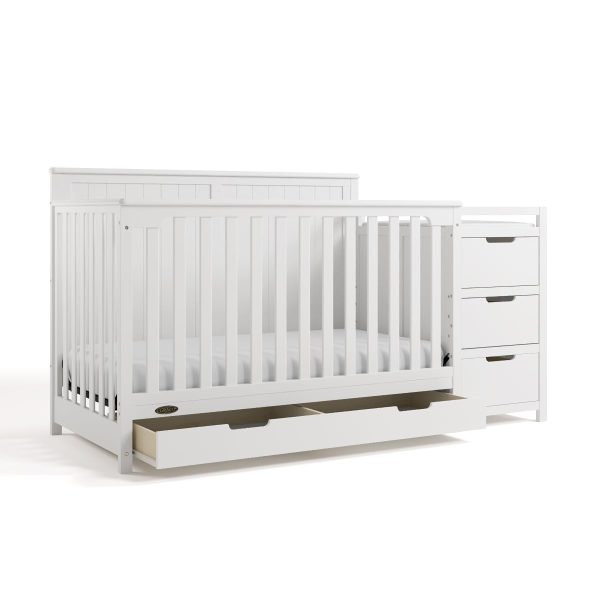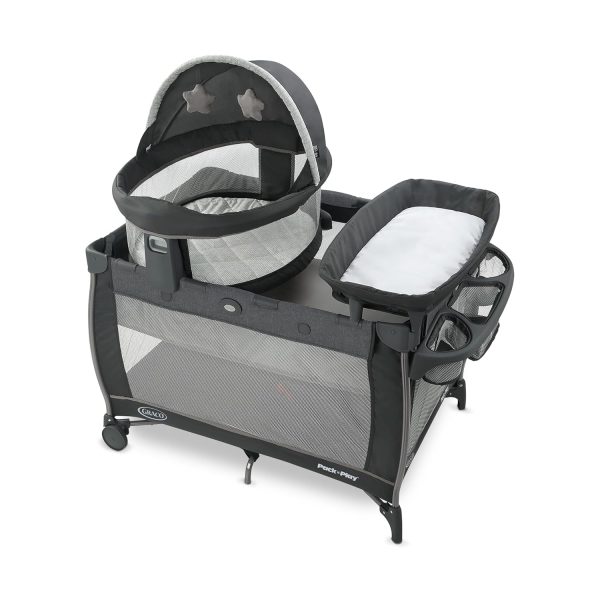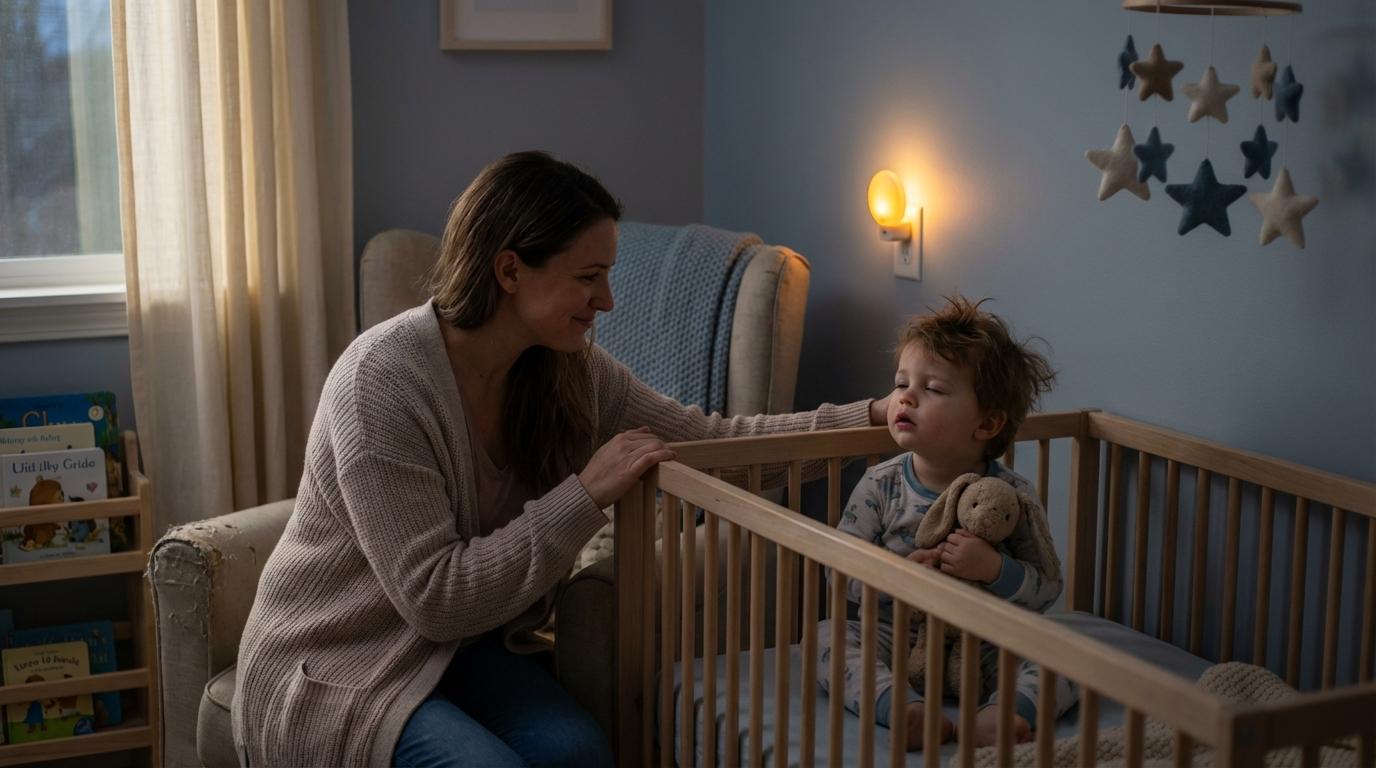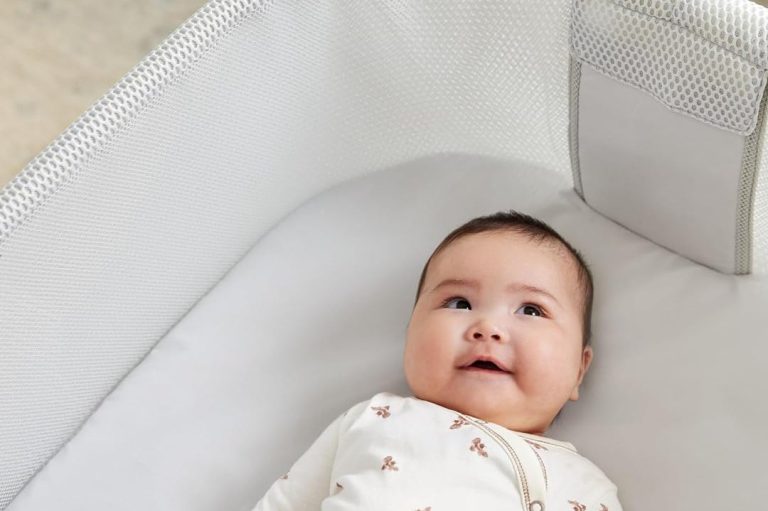
Both a bassinet and a crib can be a safe place for a newborn to sleep. A bassinet is small and portable, which makes room-sharing and night feeds easier in the early months. A crib lasts for years and can be used from day one. Most families start with a bassinet and move to the crib somewhere between 3 and 6 months — or sooner if the baby reaches the bassinet’s weight limit or starts to roll or push up.
Key takeaways
- Any sleep space you use should meet current safety standards and have a firm, flat, tight-fitting mattress.
- A bassinet makes room-sharing easier, which the AAP recommends for at least the first six months.
- Move to a crib when your baby nears the bassinet’s weight limit, starts rolling, or can push up on hands and knees — whichever comes first.
- A crib can be used from birth; a play yard is a good, flexible middle ground.
Side by side
| Bassinet | Crib | Play yard | |
|---|---|---|---|
| Typical use | Birth to ~4–6 months | Birth to ~2–3 years (longer if convertible) | Birth onwards; travel and naps |
| Footprint | Small — fits beside your bed | Large | Medium, folds away |
| Portability | Often on wheels or lightweight | Stays put | Folds for travel |
| Cost | Lower, but short-lived | Higher, long-lasting | Moderate |
| Limit | Weight limit and rolling/pushing up | Climbing out, height ~35 in | Manufacturer’s limits |
Reasons to start with a bassinet
- Room-sharing is simple: a bassinet fits right next to your bed, so feeds and settling are easier.
- Bedside sleepers sit flush with your mattress so you can see your baby — but your baby still sleeps on their own surface.
- Small spaces: apartments and shared rooms often can’t fit a crib in the parents’ bedroom.
Reasons to go straight to a crib
- You only want to buy (and assemble) one sleep space.
- Your bedroom has room for a crib, so you can still room-share.
- A convertible crib can become a toddler bed later, spreading the cost over several years.
When to move from bassinet to crib
Move your baby when any of these happen:
- They’re close to the bassinet’s maximum weight (check the label — often 15–20 lb).
- They start rolling, or push up on hands and knees.
- They look cramped, or wake from bumping the sides.
- They reach the age limit the manufacturer gives.
Making the switch easier
- Start with the first nap of the day in the crib, then bedtime a few days later.
- Keep the routine identical: same sleep sack, same white noise, same order of steps.
- If the crib is in another room, a baby monitor can help you hear wakings — but room-sharing is still recommended for the first six months.
Choosing the mattress
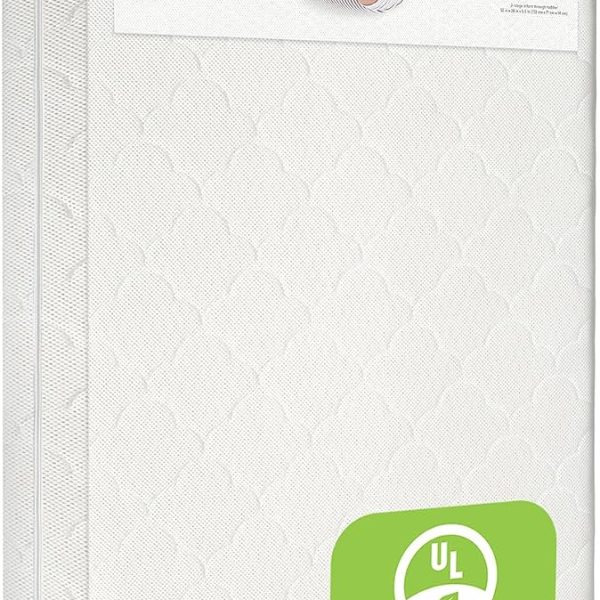
Whatever you choose, the mattress matters most: firm, flat, and a snug fit with no more than two fingers’ gap at the edges. Our crib mattress guide explains what to look for.
Frequently asked questions
Can a newborn sleep in a big crib?
Yes. A full-size crib with a firm, fitted mattress is safe from birth. Some newborns simply settle better in a smaller space.
Are bedside sleepers safe?
When they meet current federal standards and are attached as directed, they give your baby their own separate surface. Never use one at an incline for sleep.
Is a play yard as good as a crib?
For sleep, yes — use only the mattress pad that came with it and never add extra padding. See our safe sleep checklist.