Clean bottles protect your baby from germs that can grow in leftover milk. For healthy, full-term babies, the CDC’s approach is simple: wash every bottle and nipple thoroughly after every feed, and sanitise (sterilise) them at least once a day if your baby is under 3 months old, was born prematurely, or has a weakened immune system. Older babies need sanitising less often — thorough washing does most of the work.
Key takeaways
- Take bottles fully apart and rinse right after feeding so milk doesn’t dry on.
- Wash with hot soapy water and a brush used only for baby items, or on the dishwasher’s top rack if the maker allows.
- Sanitise before first use, and daily for young or vulnerable babies.
- Air-dry on a clean rack — not with a dish towel.
- Replace nipples and bottles that are cracked, cloudy or sticky.
Everyday cleaning, step by step
- Wash your hands.
- Take everything apart: bottle, nipple, ring, valve and any vent parts.
- Rinse under running water (not in the sink basin, which can harbour germs).
- Wash in a clean basin with hot water and soap, scrubbing each part with a bottle brush. Squeeze water through the nipple holes.
- Rinse again under running water.
- Air-dry on a clean rack or paper towel in a spot protected from dust.
- Clean the brush and basin regularly, too.
Ways to sterilise
| Method | How | Good to know |
|---|---|---|
| Boiling | Submerge clean parts in a pot of water and boil for 5 minutes | Cheap and effective; check parts are boil-safe |
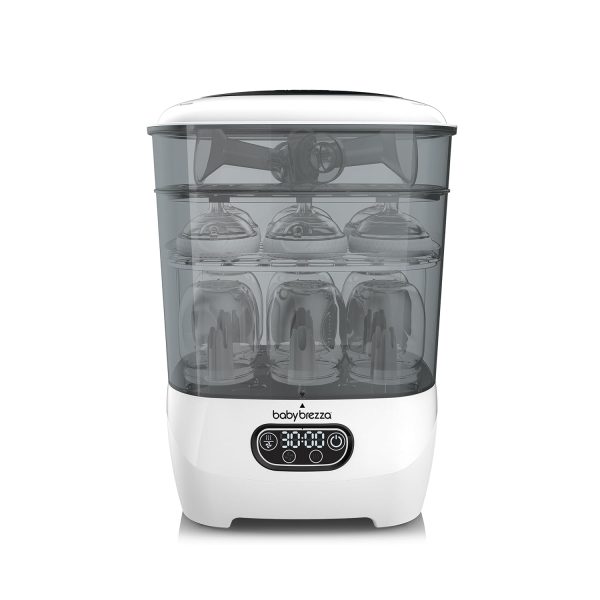
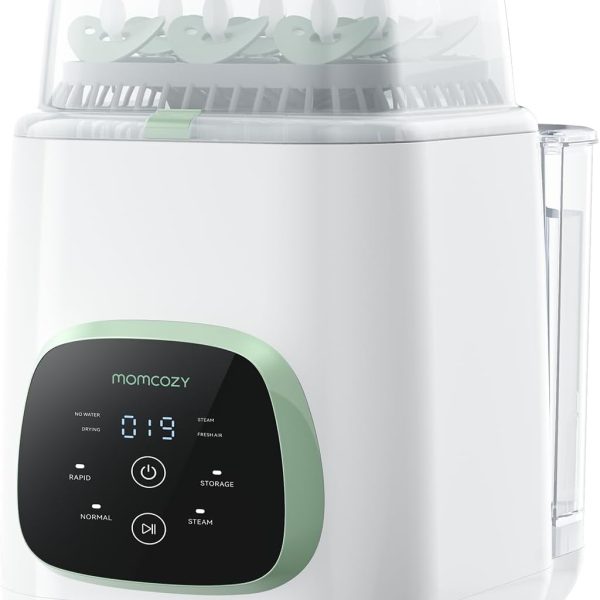
| Electric steam steriliser | Load clean parts and run the cycle | Fast, consistent; many models also dry |
| Microwave steam bags/boxes | Add water, microwave as directed | Portable; follow wattage instructions closely |
| Dishwasher sanitise cycle | Hot water + heated dry or sanitise setting | Convenient if your parts are dishwasher-safe |
| Bleach solution | 2 tsp unscented bleach per gallon of water, soak 2 min, air-dry without rinsing | Backup option when heat isn’t available |
Common mistakes
- Leaving bottles to soak for hours in dirty water — rinse straight away instead.
- Drying with a dish towel, which can transfer germs.
- Skipping the small parts: valves and vents trap milk residue.
- Storing damp parts in a closed container, which encourages mould.
- Keeping worn nipples: cracks and sticky rubber are hard to clean.
Pump parts and pacifiers
Breast pump parts that touch milk need the same care as bottles. Pacifiers should be washed regularly and replaced when worn — and never “cleaned” in a parent’s mouth. See our pumping guide for pump-specific tips.
Frequently asked questions
Do I need to sterilise after every feed?
Not for healthy, full-term babies over 3 months — washing well after every feed is enough, with sanitising now and then.
Can I reuse a bottle my baby didn’t finish?
No. Discard leftover formula within 1 hour and breast milk within 2 hours of the start of the feed, then wash the bottle.
Is dishwasher detergent safe for bottles?
Yes, if the parts are labelled dishwasher-safe and you use the top rack. Rinse residue isn’t a concern with a normal cycle.
Choosing bottles first? Read how to choose baby bottles.