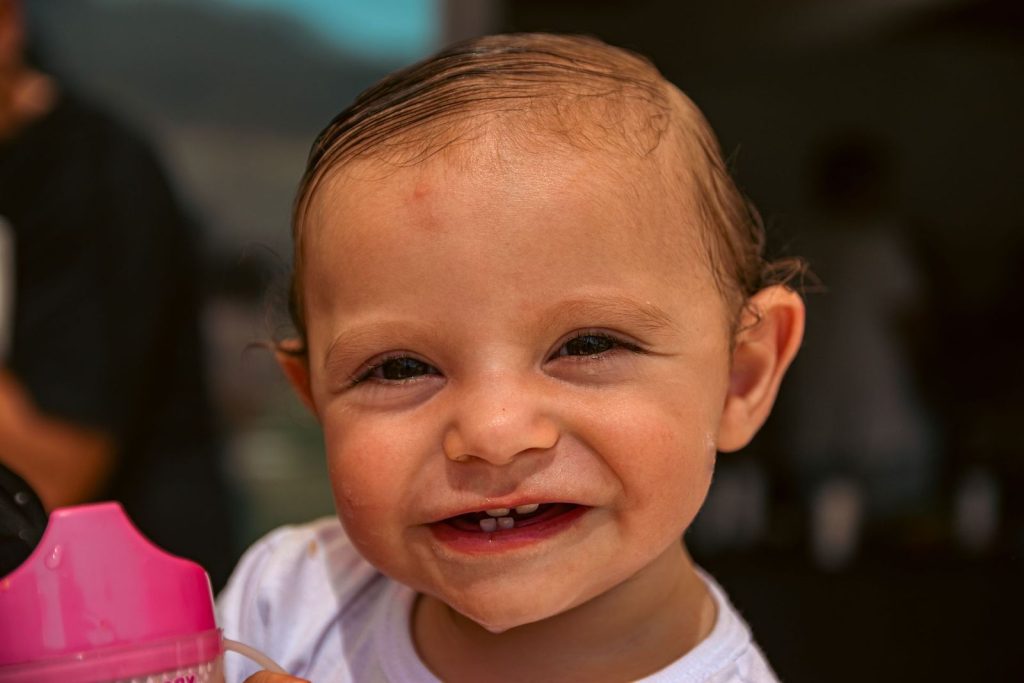
Most babies get their first tooth around 6 months, though anywhere from 3 to 14 months is normal. Teething can bring drooling, chewing and some fussiness, but it does not cause high fever, diarrhoea or illness. Soothe with gentle gum massage, a chilled (not frozen) teether, and lots of comfort — and skip numbing gels, amber necklaces and homeopathic tablets.
Key takeaways
- The bottom front teeth usually come first; all 20 baby teeth are in by about age 3.
- Common signs: drooling, chewing, swollen gums, irritability, a slight temperature rise (below 100.4°F / 38°C).
- Fever of 100.4°F or more, vomiting or diarrhoea aren’t teething — check with your doctor.
- The FDA warns against benzocaine gels, teething necklaces and homeopathic teething products.
- Start brushing with a smear of fluoride toothpaste as soon as the first tooth appears.
Typical teething timeline
| Teeth | Usual age |
|---|---|
| Lower central incisors (bottom front) | 6–10 months |
| Upper central incisors (top front) | 8–12 months |
| Upper and lower lateral incisors | 9–16 months |
| First molars | 13–19 months |
| Canines | 16–23 months |
| Second molars | 23–33 months |
Safe ways to soothe
- Gum massage with a clean finger or a damp washcloth.
- Chilled teethers — refrigerated, not frozen solid, which can hurt gums.
- Something safe to chew: firm rubber teethers, textured toys sized so they can’t be swallowed.
- Cool foods for babies eating solids: chilled yogurt or purée.
- Extra cuddles, and wiping drool often to prevent rashes.
- Pain relief such as acetaminophen (or ibuprofen over 6 months) only if your pediatrician recommends it, at the correct dose for weight.
What to avoid
- Benzocaine or lidocaine gels: the FDA warns these can cause serious side effects in young children.
- Amber, wood or silicone teething necklaces and bracelets: choking and strangulation risks.
- Homeopathic teething tablets.
- Frozen hard objects and teethers filled with liquid that can leak.
- Hard foods like raw carrot as teethers — a choking hazard.
Caring for the first teeth
As soon as the first tooth appears, brush twice a day with a soft infant brush and a rice-grain-sized smear of fluoride toothpaste. Book a first dental visit by the first birthday. Avoid putting your baby to bed with a bottle of milk — see our bottle-to-cup guide.
Teething and sleep
Teething can disrupt sleep for a few nights around each new tooth. Offer comfort, keep your routine consistent, and avoid starting new habits you don’t want long term. More in our sleep regression guide.
- has a temperature of 100.4°F (38°C) or higher (under 3 months: call right away);
- has vomiting, diarrhoea, a rash or seems unwell;
- has no teeth by 18 months;
- is inconsolable or refuses to drink.
Frequently asked questions
Does teething cause a runny nose?
Extra drool is common, but a runny nose, cough or fever usually means a cold or other illness.
Can babies be born with teeth?
Occasionally. Natal teeth should be checked by a pediatrician or dentist.
How long does each tooth take to come through?
Discomfort typically lasts a few days around when a tooth breaks the gum.