A fever is a temperature of 100.4°F (38°C) or higher. In older babies it’s usually a sign the body is fighting an infection, and how your baby is acting matters more than the number. But for a baby under 3 months, any fever of 100.4°F or more needs a call to your pediatrician right away — even if they seem well.
Key takeaways
- Under 3 months: fever of 100.4°F (38°C)+ = call your doctor immediately, day or night.
- A rectal temperature is the most accurate for babies and young toddlers.
- Watch behaviour, breathing, feeding and wet diapers as much as the thermometer.
- Never give aspirin; give acetaminophen or ibuprofen only as your pediatrician advises for your baby’s age and weight.
- Dress your baby lightly and offer frequent feeds.
When a fever needs medical attention
| Age | Call your pediatrician |
|---|---|
| Under 3 months | Any temperature of 100.4°F (38°C) or higher — right away |
| 3–6 months | 102°F (38.9°C) or higher, or any fever with irritability, lethargy or poor feeding |
| 6–24 months | Fever above 102°F (38.9°C) lasting more than a day, or any fever with worrying symptoms |
| Any age | Fever lasting more than 2–3 days, or that goes away and comes back |
- has trouble breathing, is grunting, or their lips look blue;
- is limp, very hard to wake, or inconsolable;
- has a seizure;
- has a rash that doesn’t fade when you press a glass against it;
- has a stiff neck, a bulging soft spot, or signs of dehydration (no wet diaper in 6–8 hours, no tears, dry mouth).
How to take your baby’s temperature
- Rectal (birth to ~3 years): most accurate. Use a digital thermometer with a little petroleum jelly on the tip; insert about ½–1 inch and hold until it beeps.
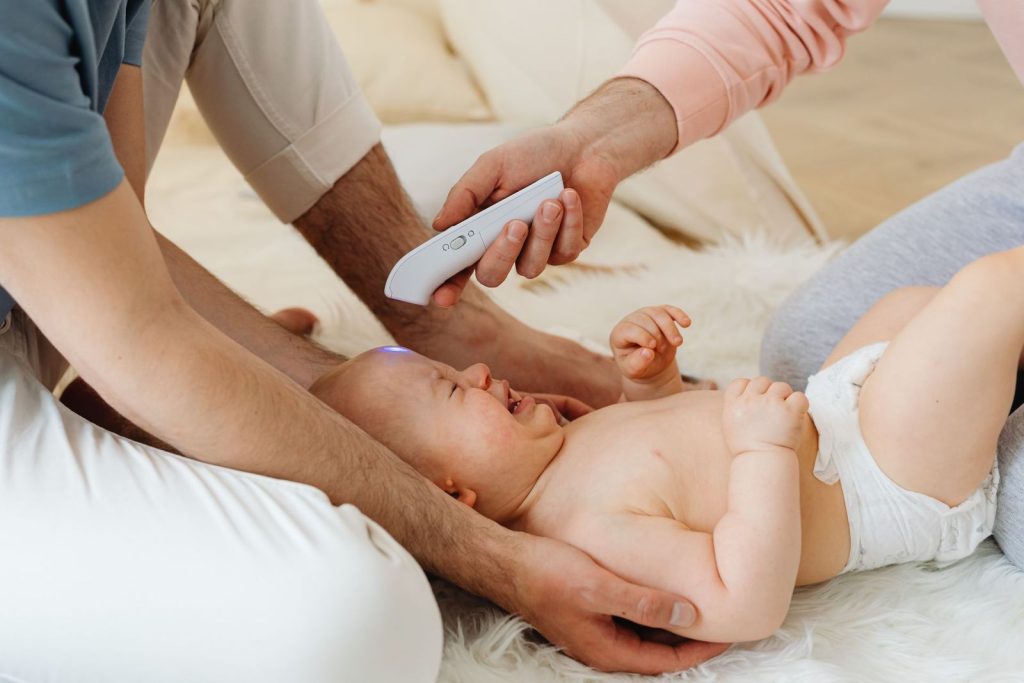
- Temporal artery (forehead scan): handy for quick checks over 3 months; confirm with rectal if unsure in young babies.
- Armpit: least accurate — useful as a screen, but confirm a fever another way.
- Ear: reliable from about 6 months.
Avoid mercury thermometers and fever strips. Don’t measure right after a bath or bundling.
Keeping your baby comfortable
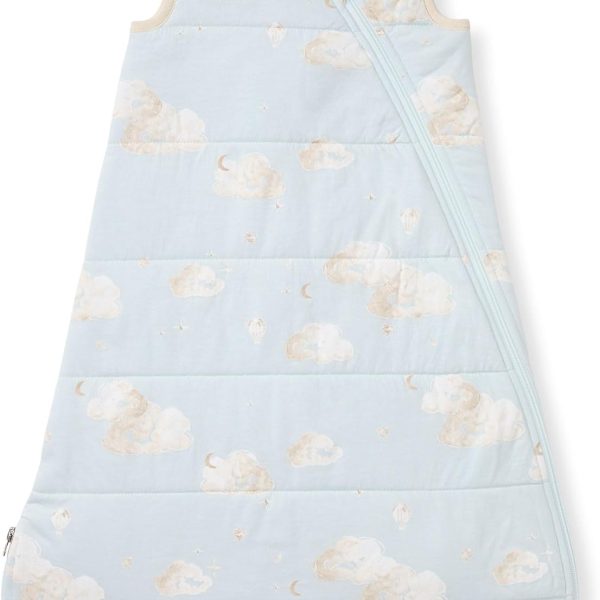
- Light clothing and a room at a comfortable temperature — don’t bundle. See our sleep layers guide.
- Frequent feeds of breast milk or formula to prevent dehydration; older babies can also have small sips of water.
- Rest and cuddles; a lukewarm sponge bath only if it comforts your baby (never cold water or alcohol rubs).
- Keep sleep safe even when your baby is unwell: on the back, in their own sleep space.
About fever medicine
- Acetaminophen can be used in babies over 2–3 months when advised; check with your doctor for babies under 3 months.
- Ibuprofen is only for babies 6 months and older.
- Dose by weight using the syringe that comes with the medicine, and write down the times.
- Never give aspirin to children (risk of Reye syndrome).
- Medicine is to make your baby comfortable — you don’t have to treat every fever.
Febrile seizures
Some children between 6 months and 5 years have a short seizure with a fever. It’s frightening but usually harmless. Lay your child on their side on a safe surface, don’t put anything in their mouth, time the seizure, and call emergency services if it lasts more than 5 minutes or is their first one.
Frequently asked questions
Does teething cause fever?
Teething may cause a slight rise, but not a true fever of 100.4°F or more. See our teething guide.
Is a higher fever more dangerous?
Not necessarily. How your baby looks and acts tells you more than the number — except in babies under 3 months.
Should I wake a sleeping baby to give medicine?
Usually not. Rest helps. Wake them if your doctor has advised a specific schedule.