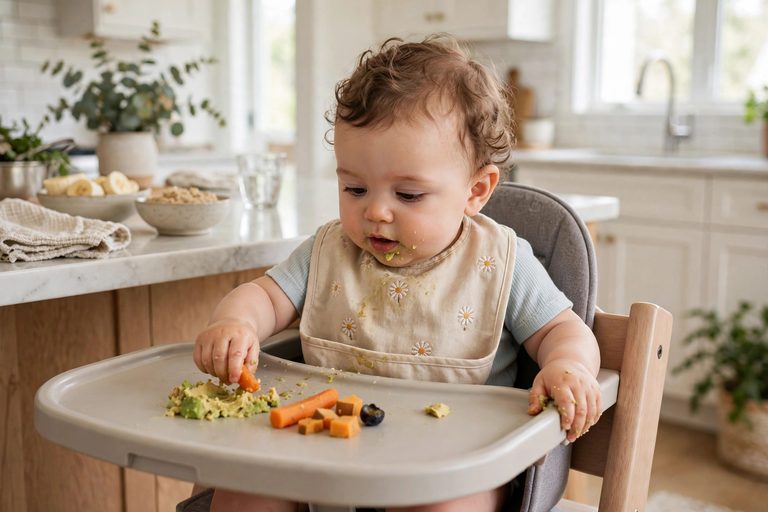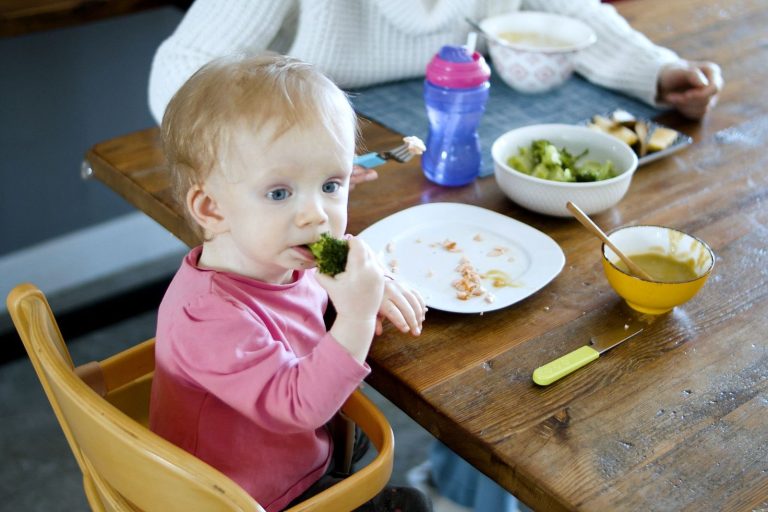
Offer common allergen foods like peanut and egg early, from around 6 months, once your baby has started solids. Don’t start before 4 months. Delaying these foods doesn’t prevent allergies, and it may increase the risk. Introduce one new allergen at a time in a baby-safe form, watch for a reaction, and then keep it in your baby’s diet regularly. If your baby has severe eczema or a known food allergy, talk to your pediatrician before you start.
Key takeaways
- Start around 6 months, once your baby is ready for solids. Our readiness checker can help you tell.
- Never give whole peanuts or spoonfuls of thick peanut butter; both are choking hazards.
- Offer each new allergen on its own, at home, early in the day.
- Once tolerated, serve it a few times a week. Regular exposure matters.
- Swelling of the face or lips, trouble breathing, repeated vomiting or floppiness means calling emergency services.
The common food allergens
In the US, nine foods cause most food allergies: milk, egg, peanut, tree nuts, fish, shellfish, wheat, soy and sesame. Peanut, tree nuts, milk and sesame cause most severe reactions in children. You can introduce all of them in the first year, one at a time, once your baby is eating a few other foods.
Safe ways to serve each allergen
| Allergen | Baby-safe ways to offer it | Avoid |
|---|---|---|
| Peanut | Smooth peanut butter thinned with warm water, breast milk or formula, or stirred into a purée; peanut powder mixed into food | Whole or chopped peanuts; thick spoonfuls of peanut butter |
| Egg | Well-cooked egg: scrambled, an omelet in strips, or hard-boiled and mashed | Raw or runny egg |
| Milk | Plain whole-milk yogurt or cheese; milk used in cooking | Cow’s milk as a main drink before 12 months |
| Wheat | Infant wheat cereal, soft pasta, toast strips | Hard crackers that snap into sharp pieces |
| Tree nuts & sesame | Smooth nut butters or tahini, thinned or mixed into food; finely ground nuts | Whole or chopped nuts and seeds |
| Fish & shellfish | Soft, flaked, well-cooked fish with bones removed; minced shellfish | Raw or lightly cooked shellfish; high-mercury fish |
| Soy | Soft tofu, edamame mashed | Whole edamame (choking risk) |
How to introduce a new allergen
- Pick a good day. Your baby is well, and you’ll be home and able to watch them for a couple of hours afterwards. Mornings are ideal.
- Start small. Offer a small amount, such as a fingertip or a quarter teaspoon, mixed into a food your baby already eats.
- Wait and watch. If there’s no reaction after about 10 minutes, offer the rest of the portion at the baby’s own pace.
- Introduce one new allergen at a time. Wait a few days before the next, so you know what caused a reaction if one happens.
- Keep it going. Once a food is tolerated, offer it regularly, a few times a week, as part of normal meals.
Babies at higher risk
Babies with severe eczema, an egg allergy, or both have the highest risk of peanut allergy, so introducing peanut early matters most for them. Talk to your pediatrician first. They may suggest allergy testing or a first taste in the clinic, and may advise starting peanut as early as 4–6 months. Babies with mild eczema, or with a family history of allergies, can usually start peanut at home around 6 months. Check with your pediatrician if you’re unsure.
Signs of an allergic reaction
- Swelling of the lips, tongue or face
- Coughing, wheezing, hoarse cry or difficulty breathing
- Repeated vomiting
- Widespread hives together with any other symptom
- Pale, floppy or unusually sleepy
Milder reactions, such as a few hives around the mouth or a single vomit, still need a call to your pediatrician before you offer that food again. Note that acidic foods like tomato or berries often cause a harmless red rash where they touch the skin. It fades quickly and isn’t an allergy.
Frequently asked questions
Should I wait to introduce allergens if allergies run in the family?
No. Waiting doesn’t help and may raise the risk. Talk to your pediatrician about the safest way to start.
Do I need to avoid allergens while breastfeeding?
No, unless you’re allergic yourself. Avoiding them doesn’t prevent allergies in your baby.
Can I give peanut puffs?
Peanut puffs that dissolve easily can be a convenient option for babies who handle meltable foods. Always supervise your baby while they eat.
See also: best first foods, baby-led weaning and feeding schedule by month.