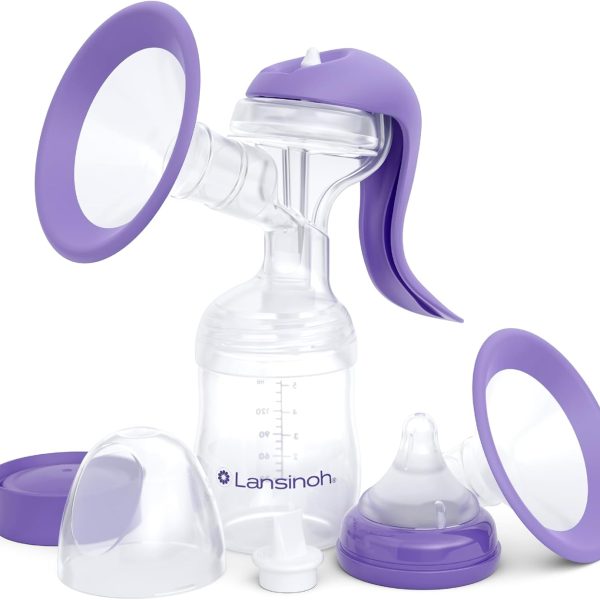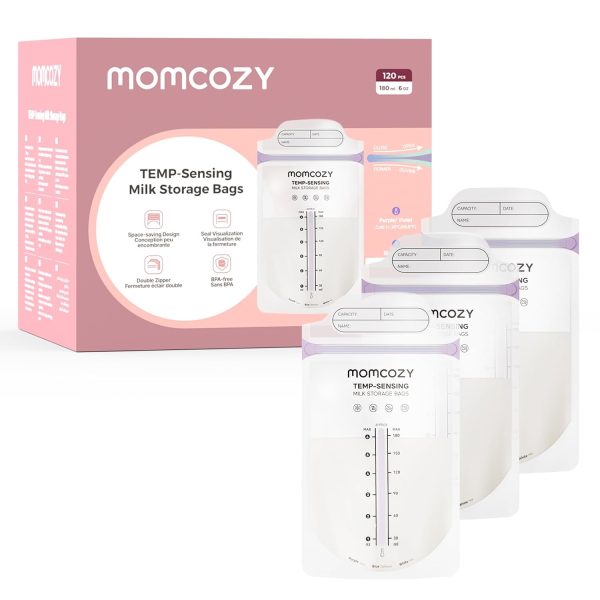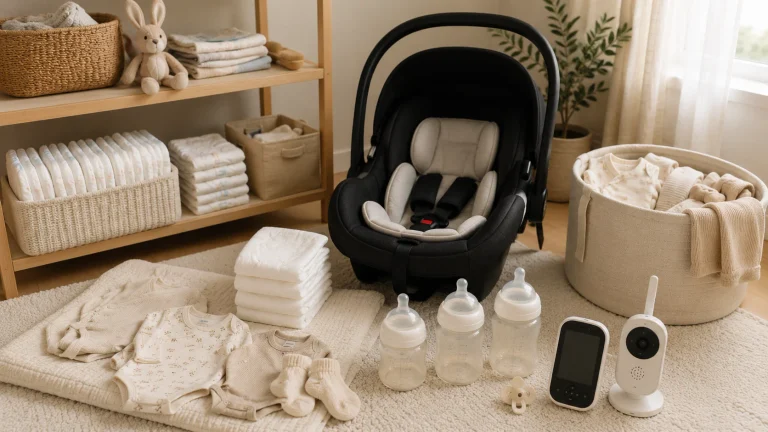
The right breast pump depends on how often you’ll pump. For occasional use, a manual pump is enough. For regular pumping — returning to work or exclusive pumping — a double electric pump is fastest. Wearable pumps add freedom to move around. If your baby is in the NICU or you need to establish supply without nursing, ask about renting a hospital-grade pump.
Key takeaways
- Match the pump to your pumping frequency, not marketing claims.
- Flange fit matters more than brand — sizes vary and should never hurt.
- In the US, most health plans cover a breast pump — check before you buy.
- Many parents use two pumps: a main one and a portable one.
- Choose closed-system pumps if you’ll share or resell; never share open-system pumps.
Types compared
| Type | Best for | Trade-offs |
|---|---|---|
| Manual | Occasional pumping, relieving engorgement, travel backup | Slower; one side at a time; tiring for frequent use |
| Double electric | Daily pumping at work, exclusive pumping | Tubing and parts; needs a power source or battery |
| Wearable (in-bra) | Pumping on the go, commuting, multitasking | Can be pricier; output may be lower for some |
| Hospital-grade (rental) | NICU babies, establishing or rebuilding supply | Large; rented rather than bought |
Features that matter
- Adjustable suction and speed, with a separate let-down (stimulation) mode.
- Several flange sizes included or available.
- Closed system (a barrier keeps milk out of the motor).
- Battery or portability if you’ll pump away from outlets.
- Noise level for pumping at work or at night.
- Easy cleaning — fewer parts saves time every day.
Getting the flange size right
Your nipple should move freely in the flange tunnel, with little areola drawn in. Pain, rubbing, blanching or low output can all point to a poor fit. Many people need a smaller size than the default. A lactation consultant (IBCLC) can measure you.
Insurance coverage (US)
Under the Affordable Care Act, most private health plans cover a breast pump. Coverage rules vary: some cover only certain models, or a manual vs electric pump, and some require a prescription. Call your insurer or a durable medical equipment supplier before buying.
After you buy
Learn a pumping routine and storage rules in our pumping guide, and keep parts clean with our cleaning guide.
Frequently asked questions
Are wearable pumps as effective as traditional pumps?
For many people they work well; some find output a little lower. Many use a traditional double pump for the main sessions and a wearable for convenience.
Can I buy a second-hand pump?
Only closed-system pumps should ever be shared, and you’ll need new parts and tubing. Personal-use open-system pumps shouldn’t be shared.
How long do pump parts last?
Valves and membranes wear out — often every 1–3 months with daily use. Replace them when suction drops.